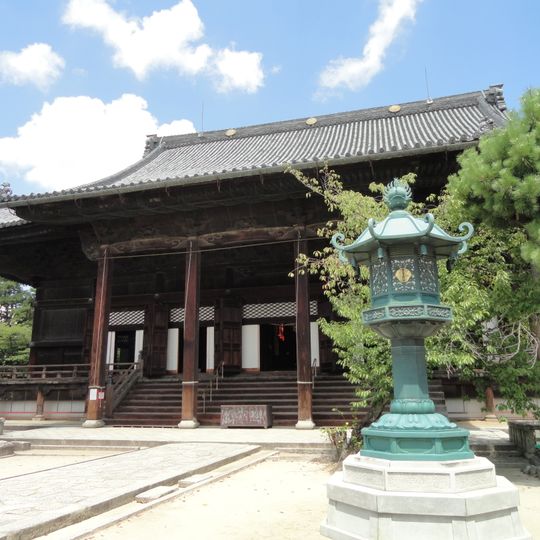
Hyakumanben Chion-ji Temple, Buddhist temple in Sakyo-ku, Japan.
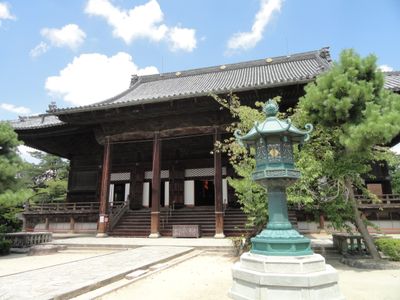
Hyakumanben Chion-ji is a Buddhist temple in Sakyo-ku, Japan, featuring wooden buildings, prayer halls, and dry gardens arranged with rocks and gravel. Narrow paths connect the different structures while pine trees and low walls separate the various sections from each other.
Tradition holds that the temple was founded in the early Heian period by Ennin as a residence on Mount Hiei, later serving as a shrine-temple of the Kamo Shrine. In 1331, the eighth abbot Kūen performed a million recitations of the nembutsu at Emperor Go-Daigo's command to end an epidemic, and the temple received the name Hyakumanben. After fires and relocations, it moved to its present site in 1662.
The name Hyakumanben comes from the 1331 million-recitation rite that ended a plague, and the temple still holds the great rosary ritual on the 15th of each month (the 25th in August). The neighborhood intersection and district carry the same name. From late October to November 3 the grounds host the used-book fair of the Kyoto Antiquarian Booksellers Association.
The grounds lie north of Kyoto University and welcome visitors daily between 9 and 4.30 without admission charges. Paths around the site are flat, although some buildings have steps that may limit access.
The temple keeps the large rosary granted by Emperor Go-Daigo in 1331, when the monk Kūen recited the nembutsu a million times to end an epidemic. It has 540 beads, not 108, and is used in the Great Rosary Ritual held on the 15th of each month, except August, when it falls on the 25th.
The community of curious travelers
AroundUs brings together thousands of curated places, local tips, and hidden gems, enriched daily by 93,457 contributors worldwide.