Sekihō-ji Temple, Buddhist temple in Fushimi-ku, Japan
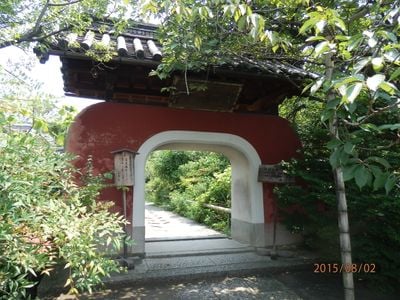
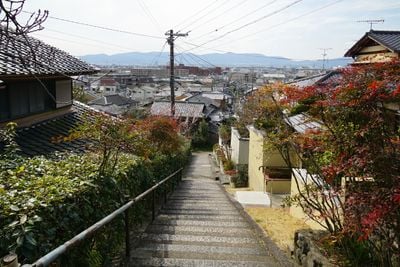
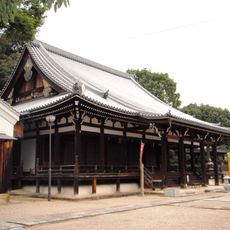
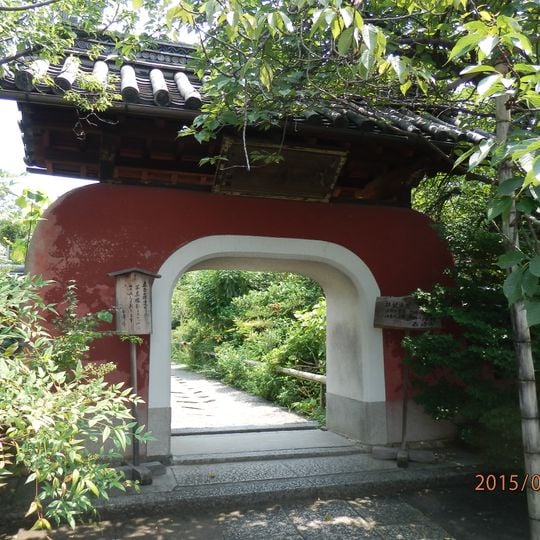
Sekihō-ji is an Obaku Zen temple in Fushimi-ku whose main hall, rebuilt in November 1985, enshrines a Shakyamuni statue. A long stone stairway with a metal handrail descends the hillside toward the residential district below. The deep-red gate has rounded corners, a white-framed arched opening and a curved tiled roof; behind the hall, some 530 rounded stone rakan figures cover the hillside.
The temple was founded during the Hōei era (1704–1711) by Sengai Shōan, sixth abbot of Manpuku-ji, the head temple of the Ōbaku school. Its origin lies in a Shaka-ren-zan Sekihō-ji built in Tada, Settsu Province, in the mid-Heian period; after that temple burned, its Yakushi Nyorai image was hidden and found in the ground in 1596, then worshipped in a small shrine near Gojō Ōhashi in Kyoto. Sengai moved the image to the present Fukakusa site.
The 530 rounded stone figures on the hillside behind the main hall are arhats, not disciples; the painter Itō Jakuchū drew the preparatory sketches with the abbot Missan Shūdai between 1772 and 1789, and over 1,000 once stood here. Jakuchū also painted a ceiling picture in the Kannon Hall, demolished before 1859; the panels are now kept at Shingyō-ji and Gichū-ji.
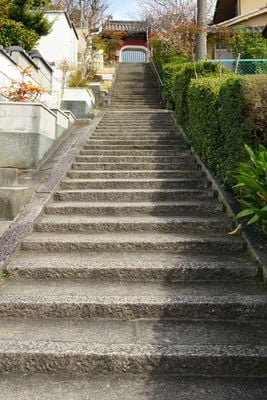
The temple stands at 26 Fukakusa Ishihōjisanchō, Fushimi-ku, Kyoto. The nearest station is Ryūkoku-daigaku-mae Fukakusa on the Keihan Main Line, about 7 minutes on foot; JR Inari Station on the Nara Line is about 11 minutes away. A long flight of stone stairs with a metal handrail on the left climbs the hillside to the gate.
The 530 rounded stone arhats on the hill behind the hall were made from sketches by Itō Jakuchū with the abbot Missan Shūdai between 1772 and 1789; over 1,000 once stood here. Photography and sketching are now banned outright after a 2012 group entered the enclosure to pose the statues with hats and candles.
The community of curious travelers
AroundUs brings together thousands of curated places, local tips, and hidden gems, enriched daily by 93,463 contributors worldwide.