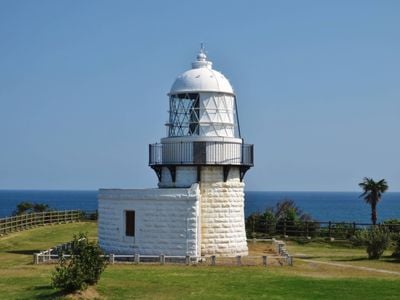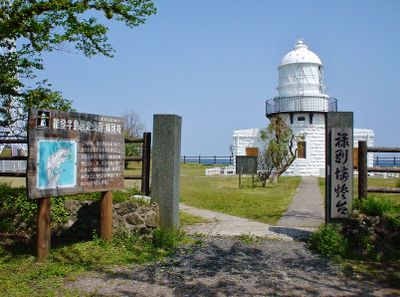
Rokkōsaki Lighthouse, Stone lighthouse in Suzu, Japan.
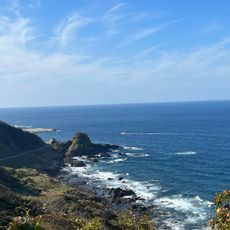
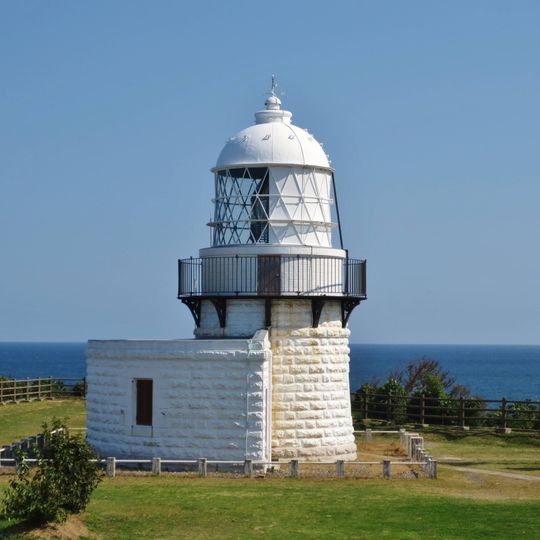
Rokkōsaki Lighthouse is a stone tower located on the coast near Suzu, positioned to guide vessels through the Sea of Japan. The structure marks treacherous rocky areas and aids safe passage for maritime traffic in the region.
Completed on 10 July 1883 and first lit that day, the lighthouse took about two years to build. Its white stone was quarried in Anamizu, shipped to Noroshi and hauled up the cliff by cable. The design is often credited to Richard Henry Brunton, though he had returned to Scotland in 1876. It was automated and made unmanned in 1963, named an A-rank preservation lighthouse, and in 2024 its Fresnel lens was shattered by the Noto Peninsula earthquake.
Locals call it the Noroshi Lighthouse after the Noroshi district where it stands. It was chosen in 2017 as a "Lighthouse of Love", a designation tied to the site's setting above the Sea of Japan. The tower keeps a fixed lens with a rotating shield, the only such mechanism in Japan.
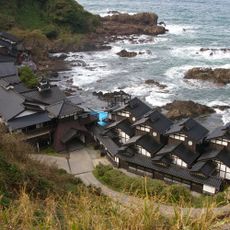
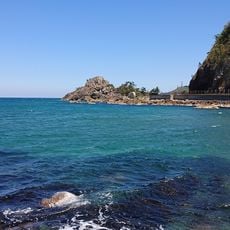
There is no parking at the lighthouse; the only access is on foot, about seven minutes from the Noroshi bus stop on the Suzu Bus Noroshi-Iida route. Two trailheads lead up: one opposite the Michi-no-Eki Noroshi roadside station, the other off the road beside Rokko Ryokan. The tower stands on 50-metre cliffs above wave-cut platforms.
The lantern holds the only plate bearing the chrysanthemum crest found in a Japanese lighthouse, granted to mark its construction. Its lens is fixed while a rotating screen produces the flashes, the reverse of most lighthouses. The Noto Peninsula earthquake of 1 January 2024 shattered the upper part of the Fresnel lens; the light was converted to LED and restoration finished on 25 March 2025.
The community of curious travelers
AroundUs brings together thousands of curated places, local tips, and hidden gems, enriched daily by 93,626 contributors worldwide.