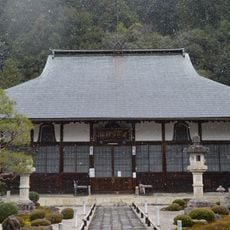
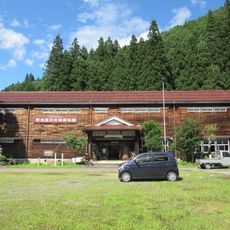
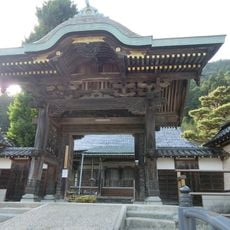
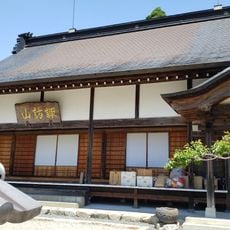
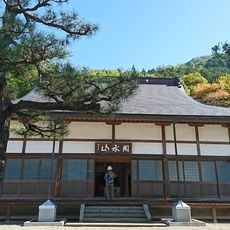
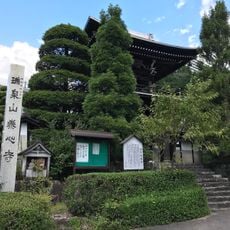
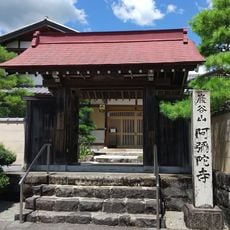
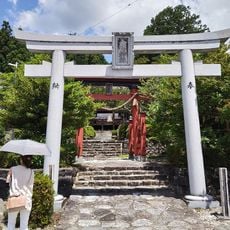
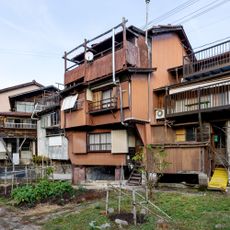
Zenshō-ji, Buddhist temple in Gero, Japan.
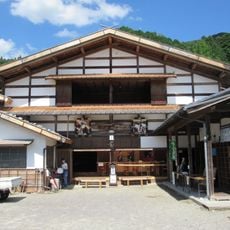
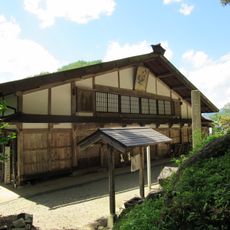
Zenshō-ji is a Rinzai Zen temple of the Myōshin-ji school in Gero, Gifu Prefecture, with the mountain name Ryūtakuzan. Its precinct holds the temple garden designated a Gifu Prefecture Place of Scenic Beauty, a pond garden laid out against the hillside. The grounds also contain the huge cedar known as Zenshō-ji no Ōsugi, a National Natural Monument.
The temple traces its founding to Mitsugi Naoyori, lord of Sakurabora Castle, who established it in 1528 or 1532 with Myōshuku Keishun as founding abbot; the founder's kinsman Kotensōkei is also named as its creator. In 1554 Emperor Go-Nara granted it the rank of jissatsu, one of the ten great Zen temples. Around 1648–1652 the temple at Nakaro, then called Entsū-ji, took the name Zenshō-ji, which it keeps today.
The temple keeps two paintings attributed to Sesshū, a large Bodhidharma and a pair of landscape scrolls, both listed as city cultural properties. It also holds four paintings and seven calligraphies by the Zen monk Hakuin. The temple's name changed with politics: after the Mitsugi defeat in 1585 the name Entsū-ji returned, and only in the Kan'ei years (1648–1652) was Zenshō-ji fixed for good.
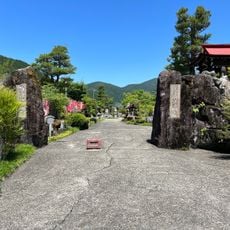
The temple is easy to reach from Gero Onsen, either by car or on foot from the train station. Once there, visitors can walk the grounds freely, as the paths are clearly laid out and easy to follow.
A cedar tree at the temple entrance is estimated to be around 1,200 years old and is listed as a National Natural Monument. Its trunk is wide enough that several people standing side by side cannot wrap their arms around it.
The community of curious travelers
AroundUs brings together thousands of curated places, local tips, and hidden gems, enriched daily by 95,354 contributors worldwide.