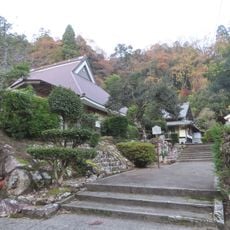
Wakasa Kokubun-ji, Buddhist temple in Obama, Japan
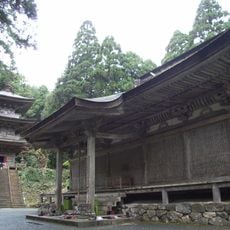
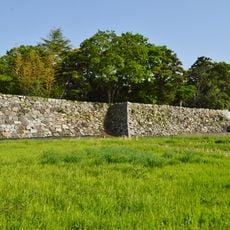
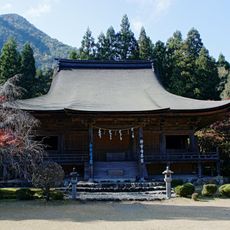
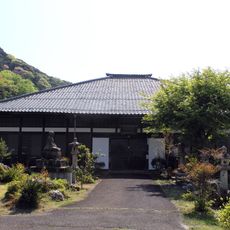
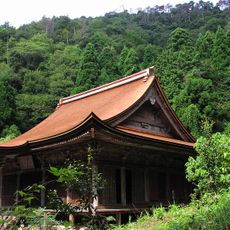
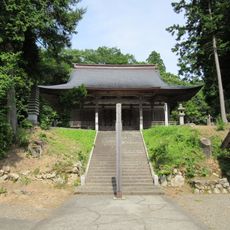
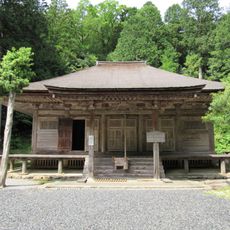
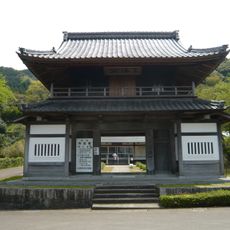
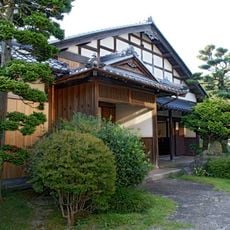
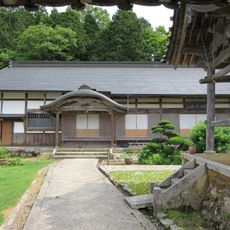
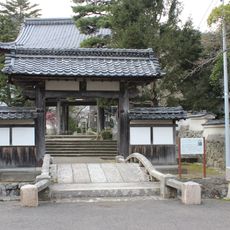
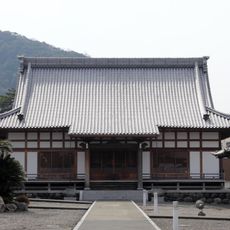
Wakasa Kokubun-ji is a Sōtō Zen temple on the Kitagawa River plain, 4.5 km east of central Obama. Its main hall, the Shako-dō, is a 5-by-5-bay irimoya-roofed building standing on the stone base of the ancient kondō; the Yakushi-dō lies to its west. The temple grounds overlap the Nara-period provincial temple site, a walled compound about 218 metres square, and contain a 50-metre circular kofun.
Emperor Shōmu's 741 edict ordered a monastery and nunnery in each province after a smallpox epidemic. Wakasa's temple was first served by the local clan temple Taikō-ji, and the present site was built in the early Heian period; a 1603 record dates it to 807. The nunnery vanishes from records after 1265, and the temple declined in the Muromachi period.
The main hall, the Shaka-dō, is named for its honzon, a seated Shaka Nyōrai about 318 cm tall, the largest of its kind in Fukui Prefecture; its body is dated to the Kamakura period and its head to the Edo period. West of it, the Yakushi-dō holds a Kamakura-period seated Yakushi Nyōrai, 79.7 cm, an Important Cultural Property moved here from the vanished provincial nunnery, flanked by seated Shaka and Amida statues.
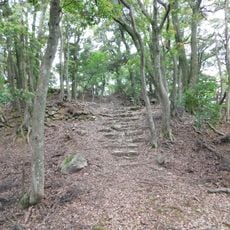
The site can be reached on foot from Higashi-Obama Station, with a walk of about twenty minutes required to get there. It helps to check the route beforehand since signage to the exact location may be limited.
Archaeological research shows that the site has unusually few original roof tiles compared to other provincial temples from the same time. This suggests the structure may have been built with less permanent materials or altered significantly later.
The community of curious travelers
AroundUs brings together thousands of curated places, local tips, and hidden gems, enriched daily by 93,447 contributors worldwide.