Kannonshō-ji Temple, Buddhist temple in Ōmihachiman, Japan
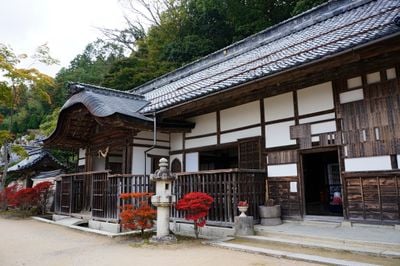
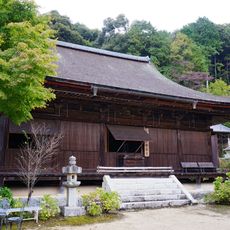
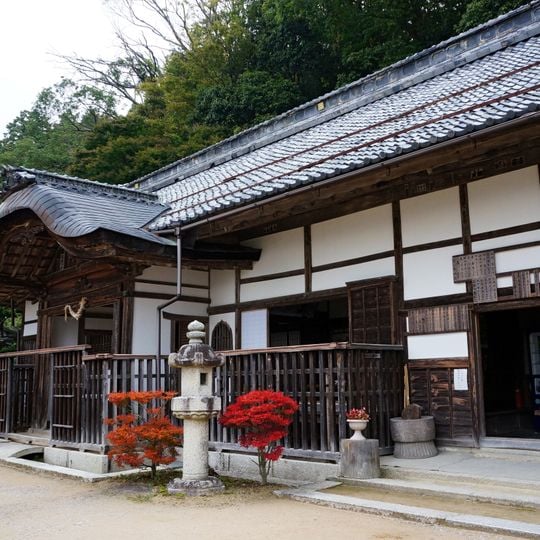
Kannonshō-ji is a Tendai Buddhist temple on the south slope of Mount Kinugasa at about 370 meters, within the ruins of Kannonji Castle. Its 2004 irimoya-style main hall has a broad grey-tiled roof, white plaster walls crossed by dark timber beams, and sliding doors behind a wooden veranda railing. A stone lantern and a potted red-leafed plant stand in front.
The temple's founding date is unknown, but it existed by the 11th century. In 1333 it sheltered Emperor Kōgon and two retired emperors during Hōjō Nakatoki's flight. In 1568 Oda Nobunaga burned it after defeating the Rokkaku; rebuilt in 1597, its main hall was again destroyed by fire in 1993 and rebuilt in 2004.
Kannonshō-ji is the 32nd stop on the Saigoku Kannon Pilgrimage, between Chōmei-ji and Kegon-ji. Its goeika hymn asks Kannon to guide the steps of pilgrims coming from distant provinces. The temple also belongs to the Kinki Saigoku, Kōshū, Lake Biwa and Shinbutsu reijō pilgrimage networks.
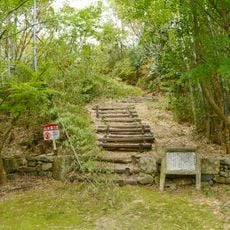
From Notogawa Station take an Ōmi Railway bus toward Yōkaichi and get off at Kannonji-guchi; the trail via Yui Shrine is the gentlest of the three climbing routes and takes about 50 minutes. From Azuchi Station the walk takes about 90 minutes and passes through Kuwanomi-dera, whose admission fee is separate. Two forest roads reach the summit by car; the Ura-sandō route from Kinugasayama Park has no stairs.
The 2004 seated Senju Kannon in the main hall is 3.56 meters tall, 6.3 meters with its halo, and carved from 23 tons of sandalwood from India. Sandalwood was banned from export, and the abbot's more than twenty trips to India were needed before Japan received special permission. The previous principal image, a standing statue under one meter, survived the 1993 fire and was shown in 2022, then planned every 33 years.
The community of curious travelers
AroundUs brings together thousands of curated places, local tips, and hidden gems, enriched daily by 94,764 contributors worldwide.