Bujō-ji, Buddhist temple in Chizu, Tottori Prefecture, Japan
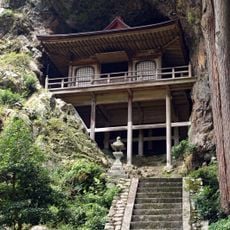
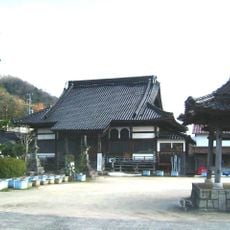
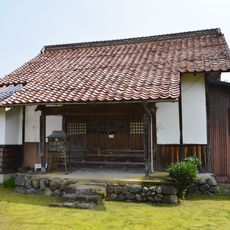
Bujō-ji is a Shingon Buddhist temple of the Kōyasan branch in Chizu, Tottori Prefecture, on a mountainside in the Uda valley. Its main hall, the Amida-dō, was built in 1685, and the thatched Daishi-dō dates from 1782. The temple once had a large complex with six monks' quarters, all lost to fire in the Tenshō era.
Founded by Shinga, a disciple of Kūkai, during the Kashō era (845–851), Bujō-ji once had a large complex with six monks' quarters, all lost to fire during the Tenshō era. The current main hall (Amida Hall) dates from 1685, and the thatched Daishi Hall from 1782.
The temple belongs to the Kōyasan Shingon school and is dedicated to Amida Nyorai. Its name is associated with the monk Shinga, a disciple of Kūkai, who is credited with founding it. Among its treasures is a National Treasure, the coloured silk image of Fugen Bosatsu from the late Heian period, now deposited at the Tokyo National Museum.
Bujō-ji stands in Tomizawa, Chizu, and is reached by the Chizu Town Sugikko bus from Chizu Station, about 10 minutes to the Tomizōji-mae stop. Since 1 January 2006 the bus runs only twice on Saturdays and not at all on holidays, so check the day before travelling. The main hall and thatched Daishidō are uphill from the stop.
The temple holds a National Treasure, a hanging silk painting of Samantabhadra on a white elephant from the late Heian period, now deposited at the Tokyo National Museum. Its main hall, the Amida Hall, was built in 1685, and the thatched Daishi Hall dates from 1782.
The community of curious travelers
AroundUs brings together thousands of curated places, local tips, and hidden gems, enriched daily by 94,157 contributors worldwide.