Etchū Bridge, Footbridge in Kita-ku and Nishi-ku, Osaka, Japan
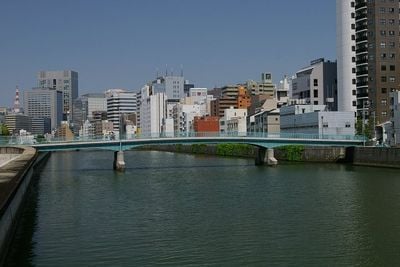
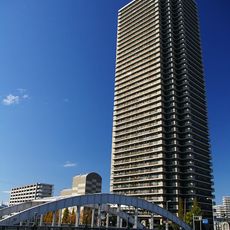
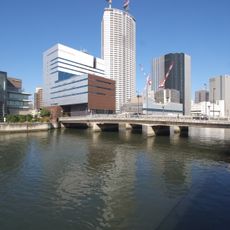
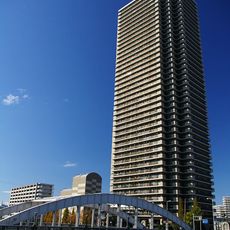
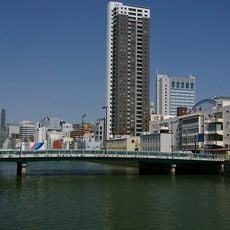
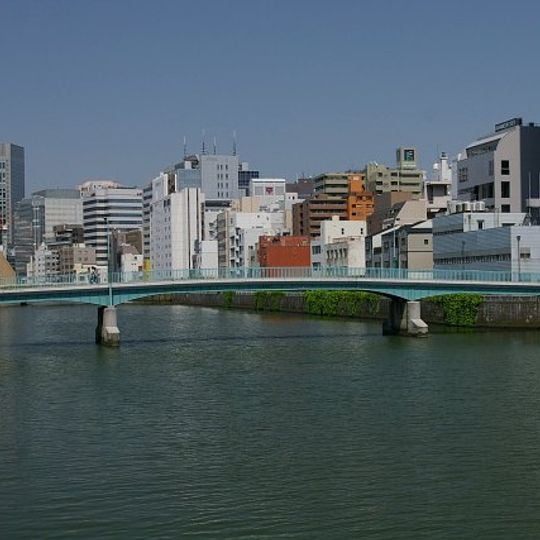
Etchū Bridge is a steel plate girder footbridge in Osaka, Japan, crossing the Tosabori River between the districts of Kita-ku and Nishi-ku. It is about 230 feet (71 m) long and roughly 12 feet (3.8 m) wide, offering just enough room for pedestrians to cross comfortably.
The bridge was built in 1929, reflecting the engineering approach of early 20th-century urban Japan. It has remained in use since then, even as the neighborhoods around it have changed over the decades.
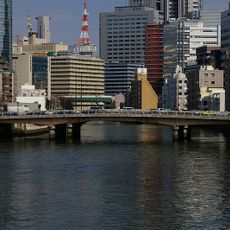
The bridge spans the Tosabori River and links two city districts on foot, making it part of everyday local movement. From the crossing, walkers can look down at the water and notice the low-rise buildings and small streets that line both banks.
The bridge is open to pedestrians only and can be reached from either bank of the Tosabori River without difficulty. Since it is not a dedicated tourist site, it works best as a stop along a walk through the surrounding neighborhood.
The plate girder design used here was already a standard choice for small urban crossings in Japan by the 1920s, which makes this bridge an early surviving example of that approach in Osaka. The flat steel beams running along its length also make the structure notably resistant to the seismic loads common in the region.
The community of curious travelers
AroundUs brings together thousands of curated places, local tips, and hidden gems, enriched daily by 91,941 contributors worldwide.