National Museum of Art, Osaka, Modern art museum in Nakanoshima, Japan
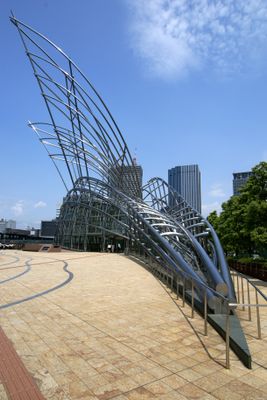
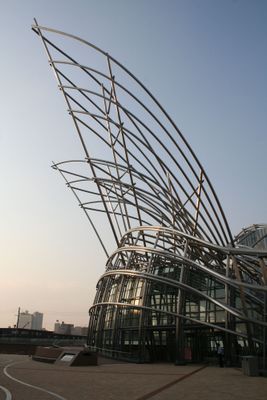
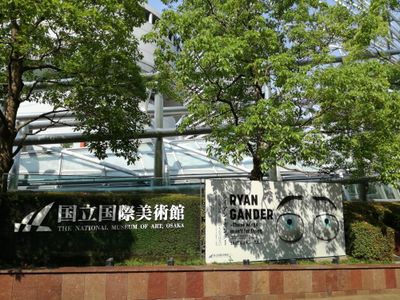
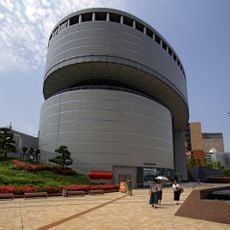
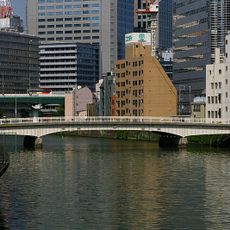
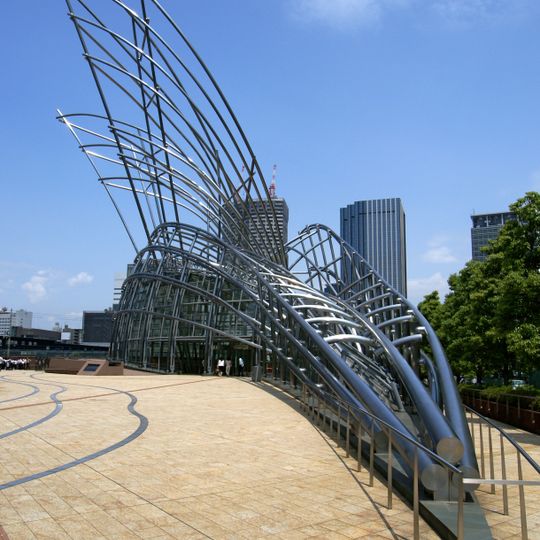
The National Museum of Art is an underground art museum in the Kita-ku district of Osaka, standing on the island of Nakanoshima between two river channels. Above the entrance, curved steel tubes rise from the ground, while the exhibition floors extend several levels below street level.
The museum originated in Suita as part of the 1970 World Exposition and later moved due to building limitations. The new structure at its current site opened in 2004 and provided more room for growing holdings.
The collection began with 828 works donated in 1978 by Kaichi Ohashi, founder of Ohashi Chemical Industries, including pieces by the Gutai Art Association. Numbering about 8,000 works, it is Japan's largest contemporary art collection. The entrance on the first basement floor holds works made for the building and carried over from the Expo '70 museum: Alexander Calder's mobile London (1962), Joan Miró's ceramic mural The Smile of the Flamboyant Heart (1969), and Takamatsu Jiro's painting Shadow (1977).
The entrance sits roughly ten minutes on foot from Higobashi Station and offers barrier-free access. Opening hours run until 19:00 on weekdays from Tuesday to Friday, closing at 17:00 on weekends.
The entrance hall holds three works transferred from the Expo '70 building: Alexander Calder's mobile "London" (1962), Joan Miró's ceramic "Innocent Laughter" (1969), made for the Gas Pavilion at the expo, and Takamatsu Jiro's painting "Shadow" (1977). In 1978 the museum received 828 works, including Gutai pieces, from collector Kaichi Ohashi.
The community of curious travelers
AroundUs brings together thousands of curated places, local tips, and hidden gems, enriched daily by 93,132 contributors worldwide.