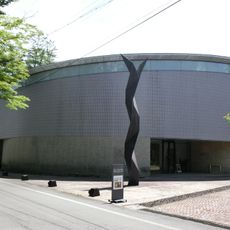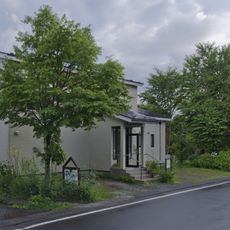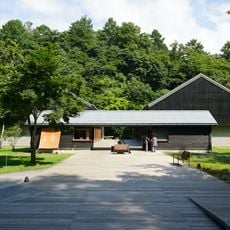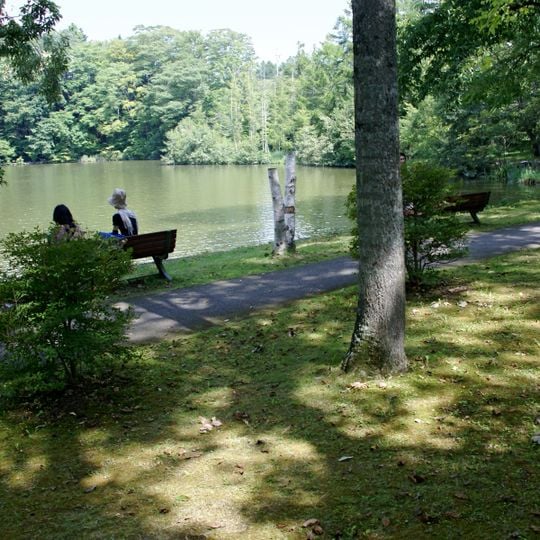
Karuizawa Taliesin, Park in Nagakura, Karuizawa, Japan.
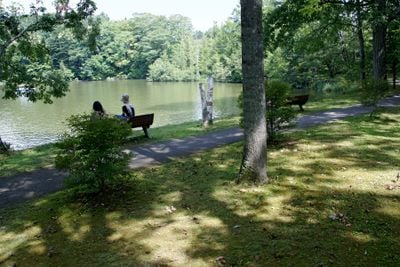
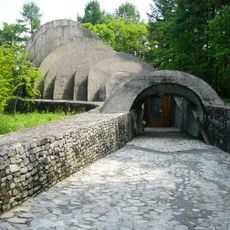
Karuizawa Taliesin is a cultural park centered on Lake Shiozawa, featuring art museums, historical structures, dining options, shops, and recreational spaces across landscaped grounds. The site is organized into different zones where visitors can move between exhibitions, galleries, and garden pathways.
In 1961 residents dug Lake Shiozawa, fed by the Edo-period Washi-ana irrigation channel, on former rice fields along the Dorokawa; it first served as an ice-skating rink. Shiozawa Yuen opened in 1971, was renamed Shiozawa Lake Land in 1983, and after a 1986 renewal became Karuizawa Taliesin in 1996, named after Frank Lloyd Wright's Taliesin.
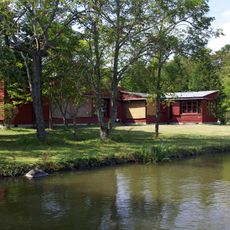
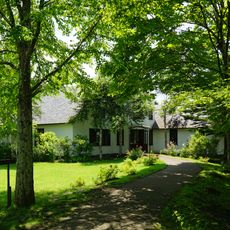
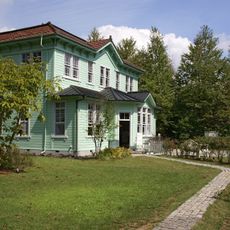
The name Taliesin comes from the legendary Welsh poet and was used by architect Frank Lloyd Wright for his creative community; the park borrowed it. The gate area holds the former Karuizawa post office of 1911, now the Meiji 44 Building, whose upper floor displays original works by Fusako Fukazawa. Inside the paid gate, the Peynet Museum occupies Antonin Raymond's 1933 summer studio, and the 1931 Asaami villa Suikyuso, designed by William Merrell Vories, served as the model for the marsh house in Studio Ghibli's film When Marnie Was There.
The park is easy to navigate with clear pathways connecting the different zones and attractions throughout the grounds. Plan to spend several hours exploring both the art displays and the garden areas at a comfortable pace.
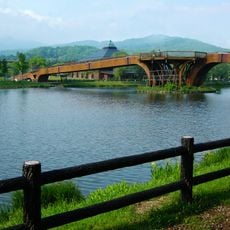
Lake Shiozawa was created in 1961 by local residents, who drew water from the Washi-ana irrigation channel dug in the Edo period; an island sits in the middle. It first served as an ice-skating rink before the surrounding park opened in 1971. Ducks and carp were released into the water, and many of the trees around the shore were planted after the lake was made, so this is no primeval forest.
The community of curious travelers
AroundUs brings together thousands of curated places, local tips, and hidden gems, enriched daily by 93,471 contributors worldwide.