道了堂跡, Buddhist temple ruins in Hachioji, Japan
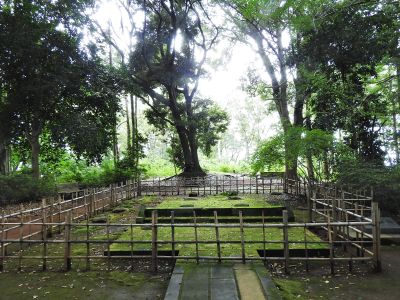
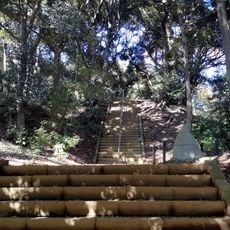
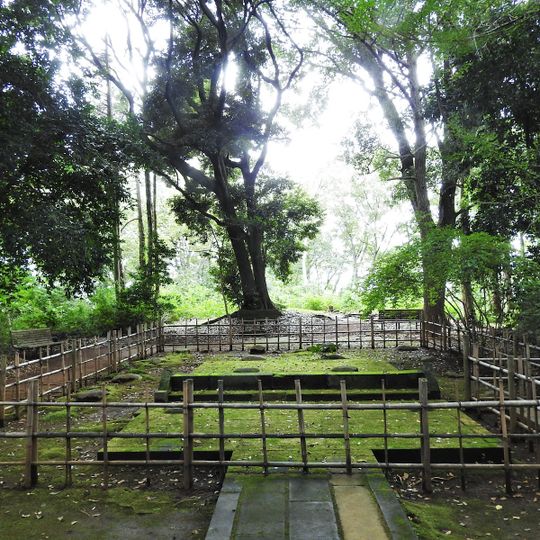
Doryodo-do ruins lie within Otsukayama Park in Yatsuzawa, Hachioji, on the Silk Road (Kanagawa-kaido) route. The temple hall was dismantled in 1986, and the site was landscaped as a park in September 1990. Two stone lanterns made in 1890 stand at the top of the stairs.
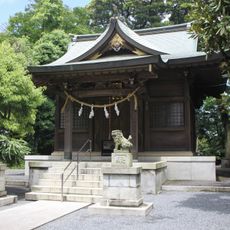
In 1874, silk merchants from Yagiu invited the Doryo-son deity from Hanakawado in Asakusa, and in 1875 the Doryodo hall (formally Eizen-ji branch temple, Soto sect, Daigaku-ji on Mount Otsuka) was built, thriving as a relay point on the Silk Road. After the Yokohama Railway opened in 1908 the route declined; following the 1963 murder of the female caretaker the hall stood empty and decayed. Hachioji bought the land in 1986 and demolished the hall; in 1990 the grounds became Otsuka-yama Park.
Stone lanterns and carved religious symbols scattered across the site show how worshippers once honored their faith in this mountain setting. These elements reveal the spiritual customs that shaped daily life at this location.
The site lies in Otsukayama Park in Yarimizu, Hachioji, on the old Silk Road (Kanagawa-kaido) route. The unpaved stretch from the park to the Silk Road Museum is listed among the Agency for Cultural Affairs' 100 Historic Roads. Two stone lanterns from 1890 stand at the top of the stairs. Lighting is sparse at night, so watch your footing.
The site is the setting of a ghost story by storyteller Junji Inagawa about a headless Jizo statue. In practice, the ridge path is used by hikers on the Silk Road trail and by people walking their dogs; lighting is sparse at night, so watch your footing.
The community of curious travelers
AroundUs brings together thousands of curated places, local tips, and hidden gems, enriched daily by 95,299 contributors worldwide.