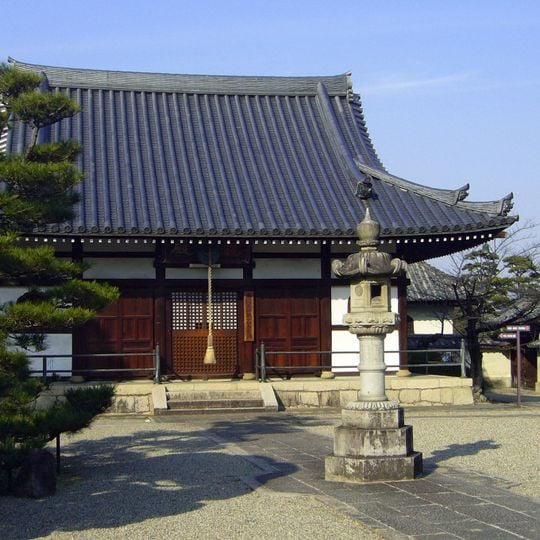
Yachū-ji Temple, Buddhist temple in Habikino, Japan
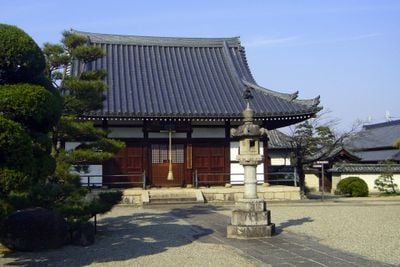
Yachū-ji is a single-storey hall with a steeply pitched roof of dark grey ridged tiles, its eaves running the full width. Below, white plastered panels alternate with dark brown wood; a wide panelled doorway is flanked by a lattice window and a hanging wooden sign, with stone steps and low plinths before it. In the grounds, the restored earthen platform and cornerstones of the former pagoda and main hall remain.
Tradition credits Soga no Umako with founding the temple under Prince Shōtoku, but excavations date its construction to around 650. It stood on the Takeuchi Kaidō and served the Funa clan, immigrants from Baekje. Fire during the Nanboku-chō wars destroyed the original buildings; after near-abandonment, the temple was revived in 1661, burned again in the Kyōhō era, and received a refectory and guest hall from daimyō Yanagisawa Yoshisato in 1724.
The temple keeps two Buddhist statues as its cultural anchors. The wooden standing Jizō Bosatsu in the Jizō-dō dates from the Heian period and is an Important Cultural Property. The 18.5 cm gilt-bronze Miroku Bosatsu, found in a storehouse in 1918, is shown every month on the 18th; its pedestal inscription gives the year 666.
Yachū-ji is about a 15-minute walk from Fujiidera Station on the Kintetsu Minami Osaka Line, or a 5-minute bus ride to the Nonoue stop followed by a short walk. The temple stands next to Nonoue Hachiman Shrine, on the west side. The Miroku Bosatsu image is shown on the 18th of each month.
The temple is linked to the Funa clan, immigrants from the Korean kingdom of Baekje who settled here at the end of the Kofun period and were close to Soga no Umako. The bronze Miroku Bosatsu found in a storehouse in 1918 bears an inscription dated 666, naming worshippers of a temple called Kashi-dera.
The community of curious travelers
AroundUs brings together thousands of curated places, local tips, and hidden gems, enriched daily by 93,463 contributors worldwide.