Reishi-ji, Buddhist temple in Sanuki, Japan
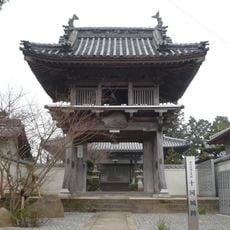
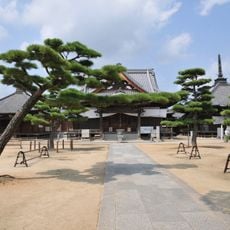
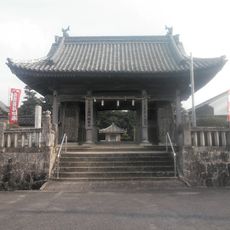
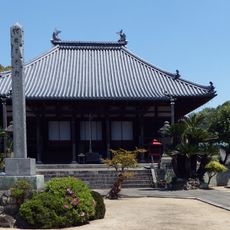
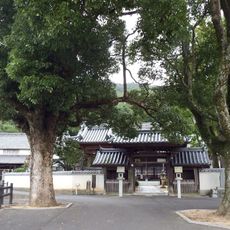
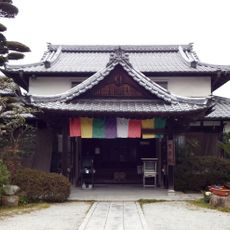
Reishi-ji is a temple of the Kōyasan Shingon school in Sanuki, Kagawa Prefecture, with the mountain name Nichinai-zan. Its main image is an Eleven-Faced Kannon, and it is the tenth stop on the Sanuki Thirty-Three Kannon pilgrimage. The grounds climb a hillside: the main gate, main hall, Karitei-dō and bell tower stand at the foot, with the Okunoin Daishi-dō and Goma-dō near the top.
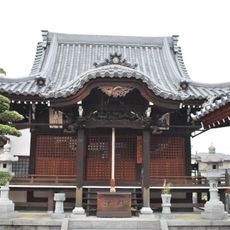
According to temple tradition, Kūkai founded the temple during the Kōnin era (810–824) to pray for his teacher Okada Ushikai; it was then called Tōrinzan Henjōkōin or Hiuchizan Taikōji. In 1662 the monk Enin came from Saimei-ji in Yamashiro and sought its revival, and Takamatsu domain lord Matsudaira Yorishige ordered its reconstruction. In 1676 Yoritsune, Yorishige's adopted son and a son of Tokugawa Mitsukuni, renamed it Tōrinzan Reishi-ji and built the main hall.
The temple belongs to the Kōyasan Shingon school and is the tenth stop on the Sanuki Thirty-Three Kannon pilgrimage, whose circuit links it to Enkō-ji 2.3 km away and Jōfuku-ji 41 km away. Its main image is an Eleven-Faced Kannon. Behind the main hall, the graves of two Takamatsu lords, Ienaga and Yorihiro, are set on the hillside.
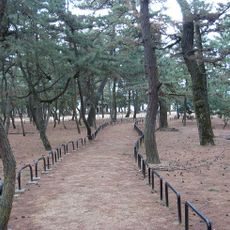
The temple stands at the foot of a hill in Sanuki, with the main hall, bell tower and Kariatei hall on the lower ground. A path and steps climb past the Matsudaira family memorial chapel to the graves of lords Yoritsune and Yorihiro. The Oku-no-in Daishido near the summit can be reached by car, with parking for a few vehicles.
Behind the main hall, a path climbs the hillside past the grave of Ogawa Hanjiro, a sculptor, and a rock carved with Sanskrit characters (bonji-iwa). Near the summit stand the Oku-no-in Daishi-dō, with parking for a few cars, the Goma-dō and the Gumonji-dō. The temple gate is said to have been moved here from the rear gate of Amataki Castle.
The community of curious travelers
AroundUs brings together thousands of curated places, local tips, and hidden gems, enriched daily by 94,368 contributors worldwide.