Naniwa-ji, Buddhist temple in Ikuno-ku, Japan
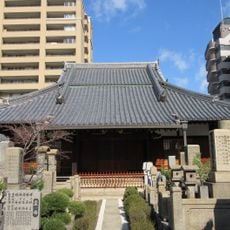
Naniwa-ji is a Rinzai-shu Myoshin-ji school temple in Ikuno-ku, Osaka, with the mountain name Gekkozan. Its main image is an eleven-faced Kannon attributed to Gyoki. The grounds hold a well and a Sumikake Jizo linked to the puppet and kabuki play Akane-some Nonaka Kakurei, and a chozubachi known as the Naniwa-ji shape.
Naniwa-ji was founded in 736 on the orders of Emperor Shōmu, when Gyōki had it built in present-day Higashi Kōzu-chō, Tennōji-ku, to lodge a Vietnamese monk who had come to Japan by Japanese envoy ship for the eye-opening ceremony of the Great Buddha of Tōdai-ji in Nara. It first belonged to the Tendai school as a direct branch of Mii-dera, fell into ruin in the Muromachi period, and was revived as a Rinzai temple by Takudō of the Myōshin-ji subtemple Gokō-in. In 1925 it was moved to its current site for the construction of Daiki Uehonmachi Station.
The temple's name comes from Naniwa, the old name for the Osaka area. Before its move, it was known as Nonaka Kannon and was famous for its peach blossoms, depicted in the hundredth view of the Naniwa Hundred Views series, now displayed in Crystal Nagahori in Osaka. The main image, an Eleven-Faced Kannon, is attributed to Gyoki.
Naniwa-ji is a 14-minute walk west from Kitatsutsumi Station on the Osaka Metro Sennichimae Line. The grounds hold a well linked to the puppet and kabuki play "Akane-some Nonaka Kakurei" and a stone basin known as the Naniwa-ji shape.
In the grounds stand a well and a Sumikake Jizo linked to the joruri and kabuki play "Akane-zome Nonaka Kakurei". The temple also keeps a water basin of a shape known as Naniwa-ji-gata, and tradition credits the eleven-headed Kannon image with being carved by Gyoki.
The community of curious travelers
AroundUs brings together thousands of curated places, local tips, and hidden gems, enriched daily by 93,667 contributors worldwide.