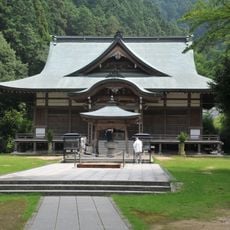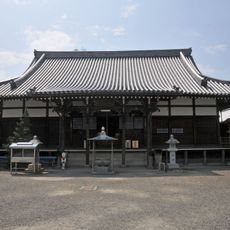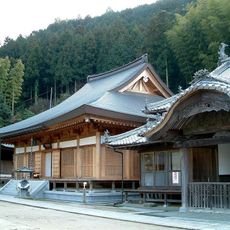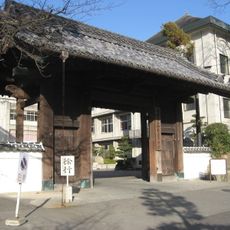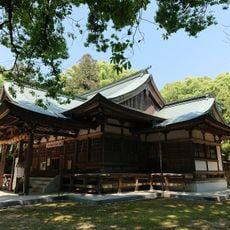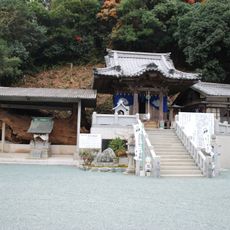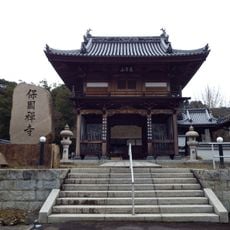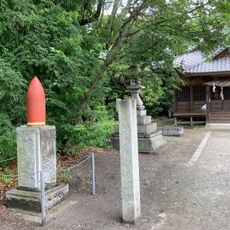
Kouon-ji Temple, Buddhist temple in Saijō, Japan.
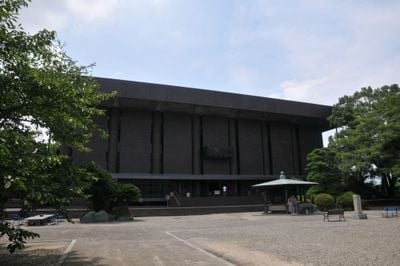
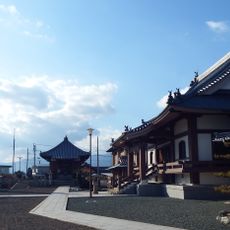
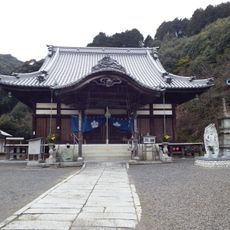
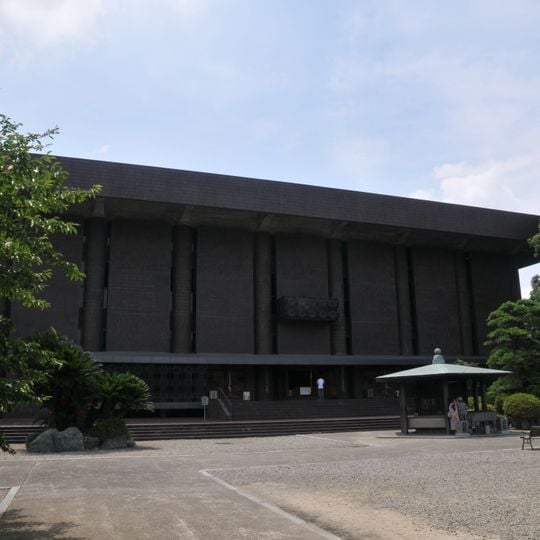
Kouon-ji is a Shingon temple in Saijō whose main hall, the Daiseidō, is a 16-meter-high reinforced-concrete building completed in 1976. Its broad dark facade rises behind a wide flight of low steps, divided into tall vertical bays by recessed columns with narrow slits between them. A rectangular relief panel is mounted at the center, and the entrance sits recessed behind the steps, with a small white sign to its left.
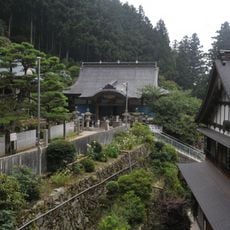
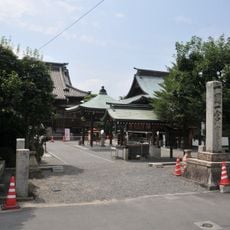
According to temple tradition, Prince Shōtoku founded Kōon-ji to pray for Emperor Yōmei's recovery, and Kūkai visited in the 9th century, praying with a sandalwood branch for a woman in labour. The buildings were destroyed by fire in the late 16th century and rebuilt in the Kan'ei era under the patronage of the Ichiya family, lords of Komatsu. In 1914 the main hall was rebuilt under abbot Zuien Yamaoka, who began the Koyasu-kō movement in 1918.
The temple is known for the Koyasu-kō, a prayer gathering for safe childbirth started in 1918 by abbot Zuien Yamaoka, which spread beyond Japan to Southeast Asia and the Americas. The main hall holds a golden Dainichi Nyorai and a statue of Kūkai holding a baby, and the temple is called Koyasu Daishi.
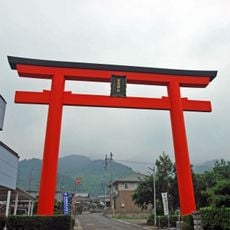
The temple can be reached by public buses from Saijō station and has parking spaces available for those driving. Access is straightforward, and visitors can easily walk around the grounds once they arrive.
The main hall, a 16-metre reinforced-concrete Daiseidō built in 1976, replaced the earlier Hondō, which was moved to Myōun-ji. Inside, more than 620 seats face a stage holding a gilded Dainichi Nyorai; the temple's secret main image sits in a cabinet behind it.
The community of curious travelers
AroundUs brings together thousands of curated places, local tips, and hidden gems, enriched daily by 93,625 contributors worldwide.