Gokurakuji, Buddhist temple in Saijō, Japan.
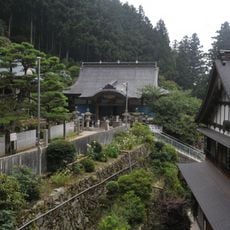
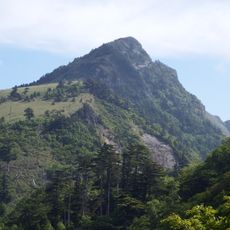
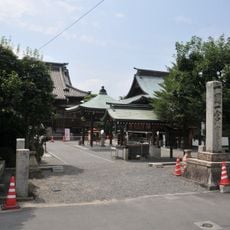
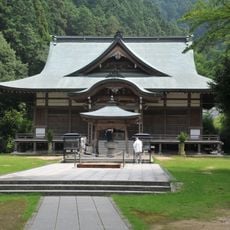
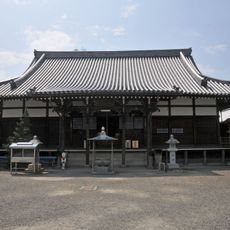
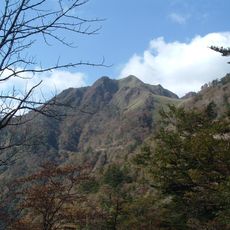
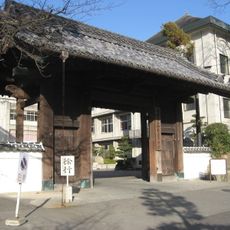
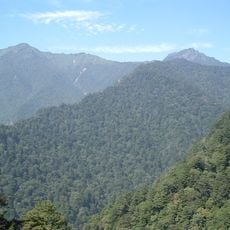
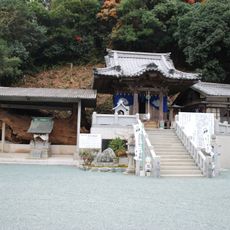
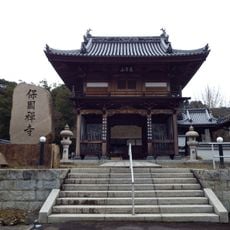
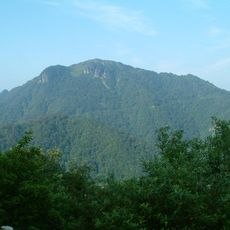
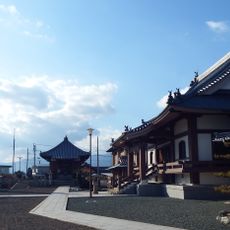
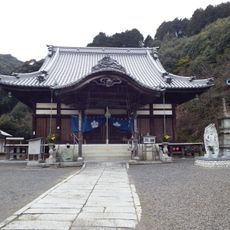
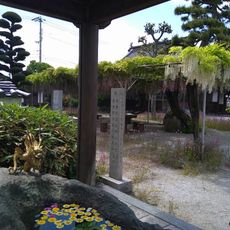
Gokurakuji is the head temple of the Ishizuchi Shingon sect on the slopes of Mount Ryūō in Ōfuki, Saijō. A steep stone stairway climbs from the prefectural road through the chūmon gate to the main hall, with the hexagonal Jizō hall, the Hachidai Ryūō shrine and a bell tower around it. A separate precinct holds the Zaō hall, where the three Ishizuchi Zaō Gongen statues stand.
Around 680, the ascetic En no Gyōja founded Tengaji on Ryūōzan, a peak facing Mount Ishizuchi, enshrining Amida triad images and three Ishizuchi Zaō gongen. In 1350, war fire burned Tengaji; the monk Yūhōshi then built a hall on the present site and named it Gokurakuji. The central Kongō Zaō gongen statue, dug from the ruins, became the Zaō Hall's main image, and in 2014 the two lost flanking statues were recreated.
The temple is the head temple of the Ishizuchi Shugendō tradition, and its goma fire ritual is held before the statue of Kongō Zaō Gongen every morning and evening. On the winter solstice around 100 people immerse themselves in the Kamo River for about 20 minutes, warm up by the柴灯護摩 fire and receive blessings from the statue; anyone may join without a reservation.
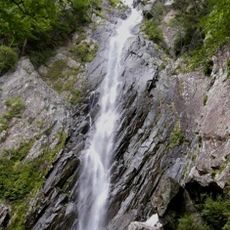
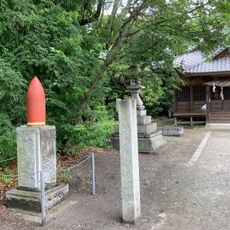
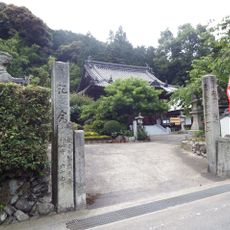
The main precinct is reached by climbing many steep stone steps from the prefectural road, with a small Inari shrine partway up. The precincts are split between the main hall area and the separate Zao Hall area, where the Gokurakuji office and lodgings stand. The Fudo waterfall, used for ascetic practice, lies on the grounds.
The main image of Zao Gongen stays hidden behind a curtain that is raised for only a few minutes during the morning and evening goma fire rituals. The flanking statues, Ryūōku and Muihōku Zao Gongen, were recreated in 2014, restoring the original set of three.
The community of curious travelers
AroundUs brings together thousands of curated places, local tips, and hidden gems, enriched daily by 94,229 contributors worldwide.