Passing Mother's Grave, Painting in Groningen, Netherlands
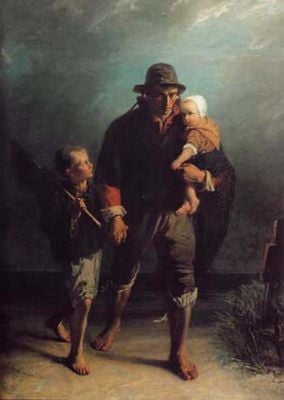
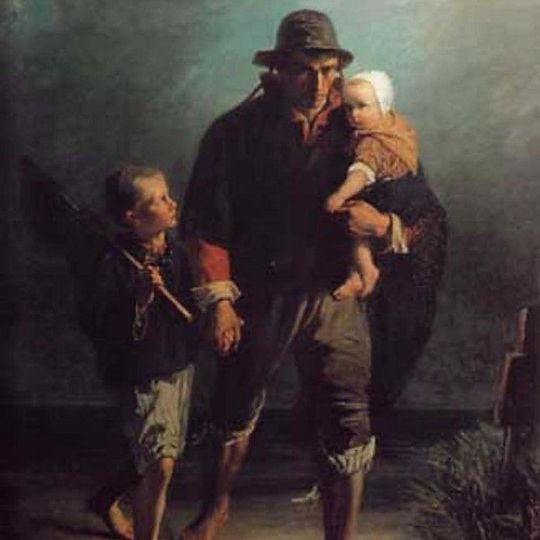
Passing Mother's Grave, also known as Passing the Churchyard, is an oil painting on canvas made by Jozef Israëls in 1856. It shows a widowed fisherman walking past his wife's grave with his two children, and the scene is set under a dark sky with a small patch of blue.
Israëls painted it in 1856 after spending time in the fishing villages of Zandvoort and Katwijk, marking his shift from historical subjects to scenes of everyday life. The work became a milestone for Dutch realism and was later admired by Vincent van Gogh, who mentioned it in his writings.
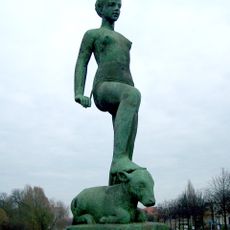
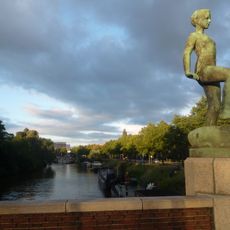
The painting is one of the best-known works of the Hague School and was widely reproduced in prints, which made it familiar to households across the Netherlands. Its image also inspired a poem by Nicolaas Beets and a monument in Groningen, showing how deeply it entered Dutch visual culture.
The painting is on long-term loan to the Groninger Museum, where it hangs in a gallery devoted to 19th-century art. The museum is easy to reach on foot from the city center, and the painting is displayed at eye level in a room with other works from the same period.
The painting is unusually large for a genre scene, measuring over 2 meters in height, which gives the figures a nearly life-size presence. A monument based on the painting was placed in Groningen in 1922, destroyed during the war because of Israëls' Jewish background, and later restored.
The community of curious travelers
AroundUs brings together thousands of curated places, local tips, and hidden gems, enriched daily by 94,512 contributors worldwide.