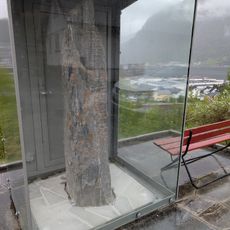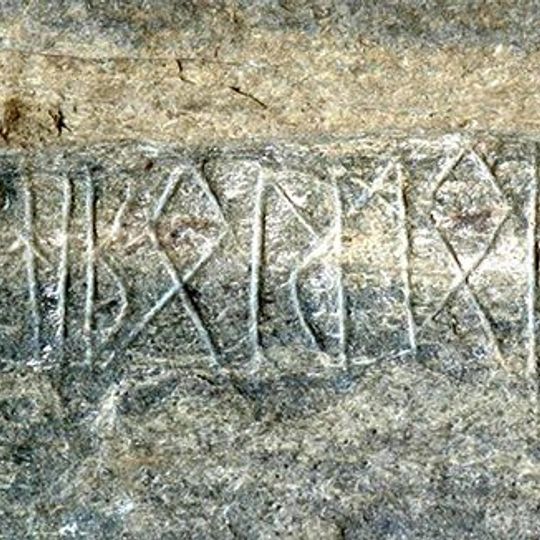
Eggja stone, Norse runestone in Sogndal, Norway
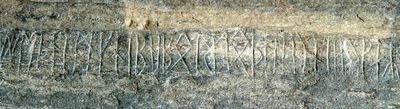
The Eggja stone is a Norse runestone featuring three rows of runic inscriptions and the image of a horse carved into its surface. The object measures roughly 160 centimeters long and 70 centimeters wide and is now housed in the Cultural History Collections at Bergen Museum.
This stone dates to the 7th century and was discovered in 1917 on the Eggja farm, where it served as a cover for an empty burial chamber beneath the ground. Its discovery was important because the long runic texts offer deep insight into how people of that era thought about death and the supernatural.
The stone depicts scenes of a shipwreck and contains instructions for handling the dead. These practical guidelines for the afterlife make it a rare window into how people thought about death and burial customs at that time.
The stone is accessible at the Cultural History Collections in Bergen Museum, allowing visitors to examine the runic inscriptions and carvings up close. It helps to read about ancient runic script before visiting so you can better understand what the inscriptions mean.
The runic inscriptions were carved into the underside of the stone, suggesting they were meant to communicate with the realm of the dead. This hidden placement makes this find a rare example of private religious practice from that period.
The community of curious travelers
AroundUs brings together thousands of curated places, local tips, and hidden gems, enriched daily by 92,076 contributors worldwide.