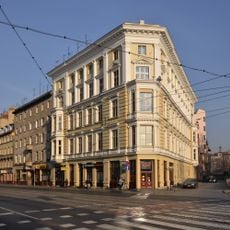
Oppersdorfs' Palace in Wrocław, Baroque palace in Wrocław, Poland
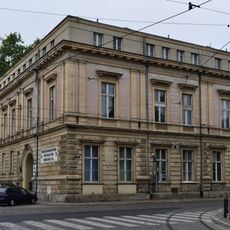
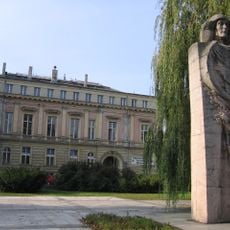
Oppersdorfs' Palace is a Baroque residence in Wrocław featuring elaborately designed facades, decorative columns, and sculptural ornaments that reflect 17th-century design principles. The building displays the symmetrical proportions and detailed ornamentation typical of the Baroque period.
The palace was built from 1725 for Countess Anna Maximiliana Aloysia von Oppersdorf, née von Lamberg, to a design by Christoph Hackner, on the site of a Renaissance garden. It stayed with the von Lamberg family until 1790, then housed offices and publishing houses. Interiors were rebuilt in Neo-Baroque style by Conrad Helbig in 1924–26; damaged in 1945, it lost its facade dormer until post-2000 restoration reinstated it.
The palace is named after Countess Anna Maximiliana Aloysia von Oppersdorf (née von Lamberg), who bought the garden here in 1725 and had the Baroque palace built. She was known for her free manners; among her lovers were Augustus II the Strong and Aleksander Benedykt Sobieski, son of King John III. From 1790 the building housed offices, publishers and editorial offices; in the 1960s it held a printing workers' club.
The palace is located in central Wrocław and can be easily accessed on foot from the Old Town area. When visiting, allow time to walk around the exterior to fully appreciate the architectural details.
The palace stands on the site of a Renaissance garden planted by the physician and botanist Laurentius Scholtz von Rosenau, where oranges, lemons, figs, pomegranates and pistachios were said to grow. A later owner, the lawyer Wolfgang Scharschmidt, added a water garden with unusual fountains before the palace was built.
The community of curious travelers
AroundUs brings together thousands of curated places, local tips, and hidden gems, enriched daily by 94,380 contributors worldwide.