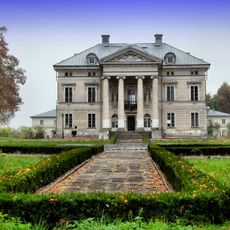
Lubomirski Palace, Baroque palace in Opole Lubelskie, Poland
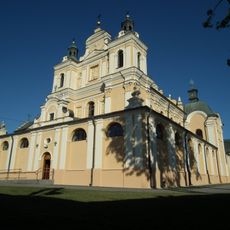
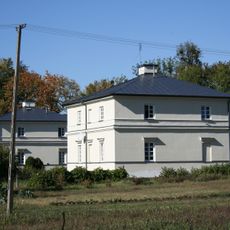
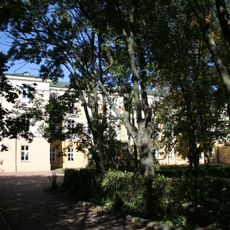
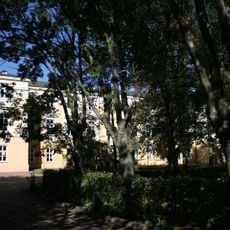
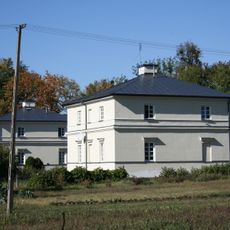
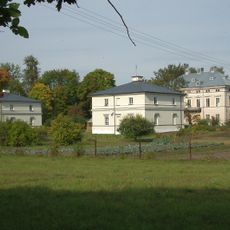
Lubomirski Palace is a three-storey rectangular building with projections at the ends of its facades, rebuilt as Russian barracks after 1854. The northern courtyard facade has thirteen bays with Ionic pilasters; the southern garden facade has fifteen bays with Tuscan pilasters. The wider central window on the first floor marks the former main entrance, reached by stone steps.
A medieval castle of the Słupecki family stood here; Felix Słupecki rebuilt it into a palace finished by 1613, as a ceiling beam found in the 1930s attests. Jan Tarło had it rebuilt in Baroque style in 1737–1743 under Tylman of Gameren, and the Lubomirskis remodelled it around 1766–1771. After 1854 the Russians converted it into barracks, stripping the mansard roof and sculpture.
Feliks Słupecki, a Calvinist, founded a Reformed Church school here in 1598 with Krzysztof Kraiński as its first head, and gathered paintings and a theological library. Jan Tarło brought the Piarists to Opole in 1743; they opened Poland's first craft vocational school in 1761 and were expelled after the January Uprising of 1863.
The building now serves as a high school named after Adam Mickiewicz, so access is generally restricted to school hours and special events. Check in advance about timing and conditions before planning a visit to see the interior.
The 1613 completion of the Słupecki residence is recorded on a ceiling beam found during a 1930s renovation; that beam is now kept in the old bell tower of Opole Lubelskie's parish church, not in the palace itself.
The community of curious travelers
AroundUs brings together thousands of curated places, local tips, and hidden gems, enriched daily by 94,559 contributors worldwide.