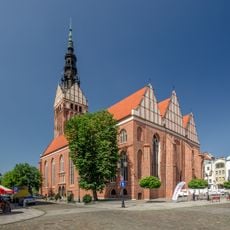
11 Sigismund Augustus Boulevard in Elbląg, former malthouse, Castle ruins and museum building in Elbląg, Poland
The former Teutonic Order castle in Elbląg stood in the south-western part of the city until 1454. Its above-ground remains include the cellars and a 14th-century malthouse of the northern bailey, plus fragments of walls and a tower. A modest Renaissance building of 1521, rebuilt in 1599, now houses a museum.
The Teutonic Order built the castle in 1237 after conquering the western lands of Pogesania; brick and stone construction began in 1239–1240. From 1251 to 1309 it was the order's most important castle in Prussia and the seat of the Prussian master and general chapter. In 1454 the Prussian Confederation captured it after a six-day siege and demolished it on the orders of the Old Town council.
The name Elbląg derives from the river Elbląg, and the castle's church of St. Andrew held a relic of the True Cross donated in 1232; Pope Gregory IX granted a ten-day plenary indulgence to crusaders who visited it. The city seal, the oldest surviving Hanseatic seal, shows a ship under full sail.
The former castle area lies in the south-western part of Elbląg, near where the Kumiela meets the Elbląg river. Of the fortress only the north bailey survive: cellars, a 14th-century malthouse, wall fragments and a tower. The 1521 building above the west wing cellars, rebuilt in 1599, now houses the Archaeological-Historical Museum.
The 1914 and 1919 excavations on the former castle grounds uncovered many architectural details, among them a richly decorated portico with the motif of the wise and foolish virgins, probably the model for a similar portico in the castle church at Malbork.
The community of curious travelers
AroundUs brings together thousands of curated places, local tips, and hidden gems, enriched daily by 94,707 contributors worldwide.