Bałtów Palace, Neoclassical palace in Bałtów, Poland
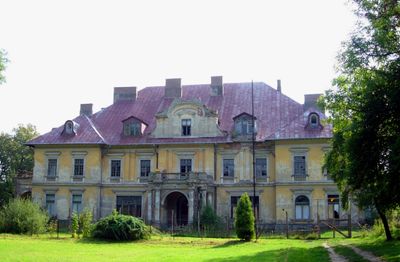
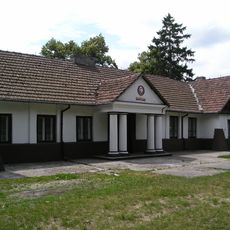
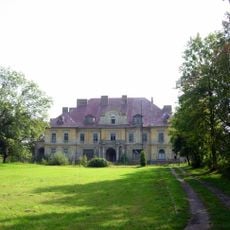
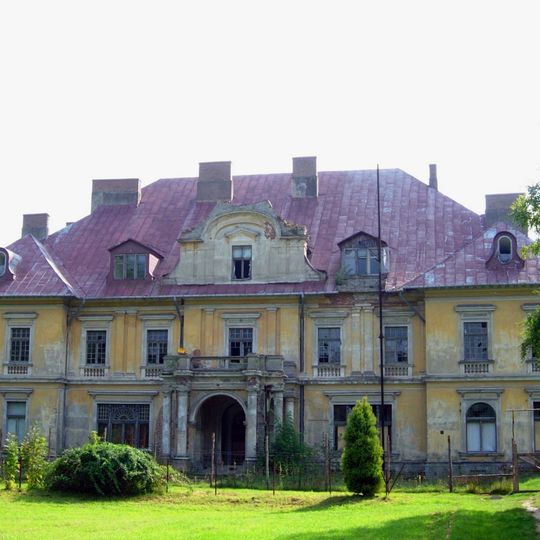
Bałtów Palace is a classicist residence built between 1894 and 1899 for Prince Aleksander Drucki-Lubecki, inspired by Italian architecture. It stands on a rectangular plan and originally had three storeys; after a fire in 1913 one storey was removed. Above the entrance is the inscription: "Boże Ci wszyscy, którzy tu bywają czego nam życzą niechaj sami mają".
Prince Aleksander Drucki-Lubecki built the palace between 1894 and 1899 in a classicist style inspired by Italian architecture. A fire in 1913 removed one of its original three storeys. In August 1944 German troops expelled the Lubecki family and quartered a 300-man battalion there; Soviet soldiers later used the building as a shooting range. In July 2014 it returned to the family's heirs after 70 years.
The palace entrance bears the Latin-inscribed motto "Boże Ci wszyscy, którzy tu bywają czego nam życzą niechaj sami mają", a Polish invocation wishing visitors the same good they wish the residents. The surrounding landscape park, begun in the 17th century and completed in 1900, covers about 10 hectares. The estate returned to the Drucki-Lubecki heirs in July 2014 after 70 years.
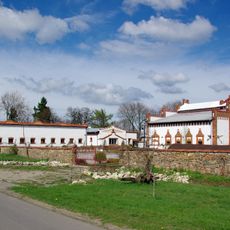
The palace stands in Bałtów, Świętokrzyskie Voivodeship, surrounded by a landscape park of about 10 hectares. The interiors are not regularly open, so visits focus on the exterior and the park. The complex also includes a 1900 workers' house, a 1914 gatehouse, a deep-well turbine building and a 1925 transformer station.
Above the entrance runs a Latin-script inscription in Polish: "Boże Ci wszyscy, którzy tu bywają czego nam życzą niechaj sami mają" — roughly, may all who pass here receive what they wish for us. The palace also lost its third storey after a 1913 fire, leaving the two floors seen today.
The community of curious travelers
AroundUs brings together thousands of curated places, local tips, and hidden gems, enriched daily by 94,839 contributors worldwide.