Saint Florian church in Koprzywnica, Romanesque church in Koprzywnica, Poland
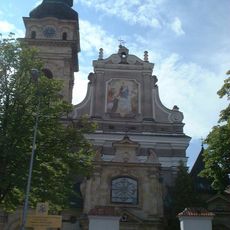
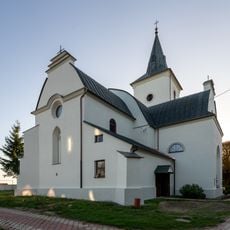
Saint Florian church is a three-nave basilica with a transept and a rectangular presbytery, built of stone under master Simon and consecrated in 1207. Its cross-ribbed vaults, dentil frieze and carved capitals with geometric and plant motifs survive from the Romanesque phase, while the 18th-century facade and a cupola-like roof turret made in 1678 by Kraków master Michał Pfaf reflect later rebuilding.
The Cistercian abbey was founded around 1183 by comes Mikołaj Bogoria of Skotniki with the support of Duke Casimir the Just, and the first monks arrived from Morimond in 1185. The Romanesque church, built under master Simon between 1207 and 1220, was consecrated in 1207 by Bishop Pełka of Kraków. Mongol raids devastated the monastery in 1241 and 1259, and after the Russian authorities dissolved the order in 1819 the church became a parish in 1821.
The church has been the parish church since 1821, when the Sandomierz bishop Prosper Burzyński took it over after the Cistercian order was dissolved in 1819. Gothic wall paintings from the early 15th century survive on the south wall of the presbytery, showing the Last Judgment and scenes from the life of Mary. The relics of Saint Florian were brought to the church on 4 May 1995.
The church is an active parish, so visits are best outside Mass times; the former monastic rooms are unused except the chapter house, now a lapidarium. The interior floor is level, but the Romanesque stonework and the 1678 cupola-like turret are best examined slowly. The east wing of the monastery survives next to the church.
Masons' marks left by the craftsmen who built the church are visible on several stones, serving as medieval signatures of their work. These small carved symbols allow visitors today to identify individual craftsmen who labored on this structure more than 700 years ago.
The community of curious travelers
AroundUs brings together thousands of curated places, local tips, and hidden gems, enriched daily by 94,770 contributors worldwide.