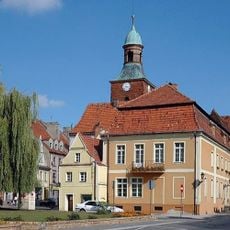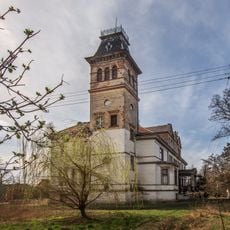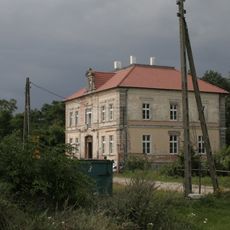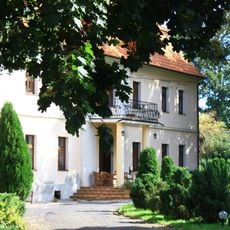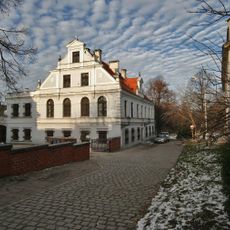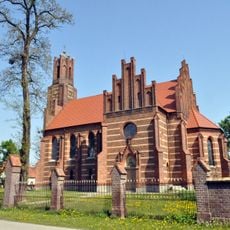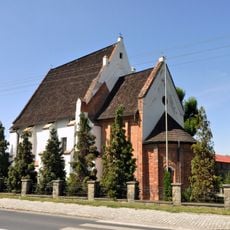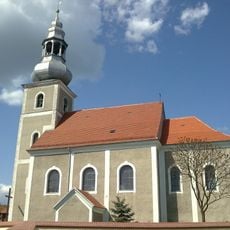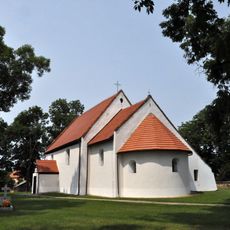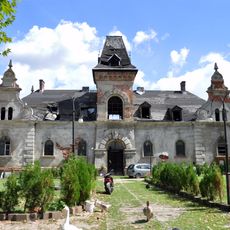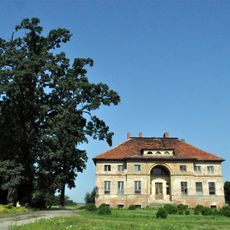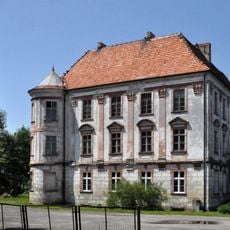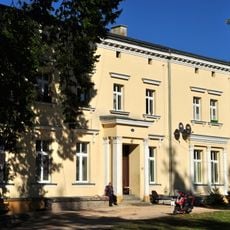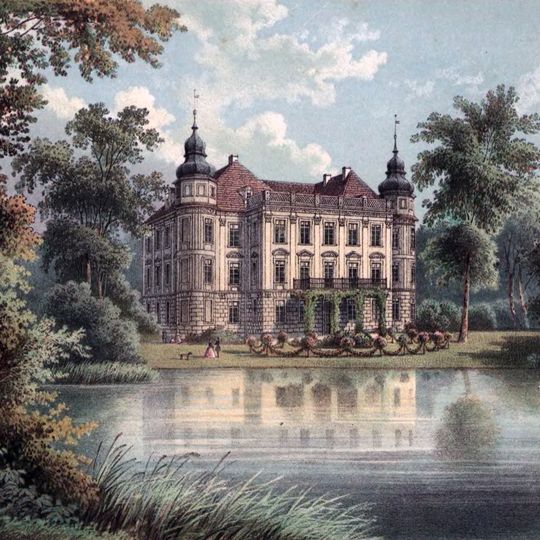
Palace in Szczepanów, Baroque palace in Szczepanów, Lower Silesian Voivodeship, Poland.
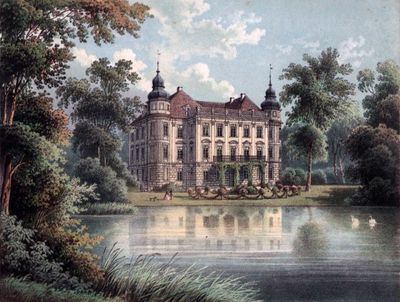
The palace in Szczepanów is a three-winged building with a Baroque facade placed between two towers, marking the transition from Renaissance to Baroque. The towers were raised by one storey in the 1840s, when the garden-side facade was altered. Rich stucco decoration survives on the ground floor.
A manor at Ober-Stephansdorf is documented in the first half of the 14th century; from 1523 to 1585 the von Schindel family held it, and by marriage it passed to the von Kanitz until 1617. Frantz Batzner von Schlagenberg, who bought it in 1688, had the palace rebuilt in 1690. Damaged in the Seven Years' War, it was rebuilt in 1768–1772 under the Counts von Schweinitz und Krain, when the ground-floor stucco work was made. The von Loesch family, last Heinrich von Loesch, owned it until 1945.
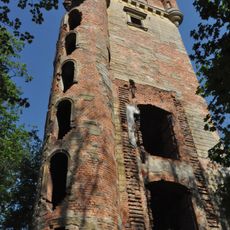
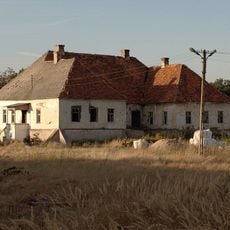
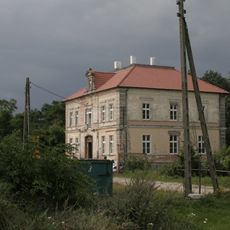
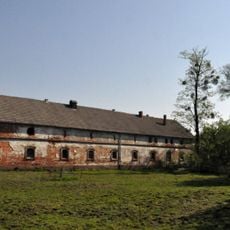
The palace is the centre of a palace-and-farm complex whose layout is still legible: an 18th–19th-century park, a farmyard from the second half of the 19th century with a manager's house, three residential outbuildings, a stable-storehouse, three cattle sheds, a barn, a mill, a distillery and the ruins of a tea pavilion. The German name Ober-Stephansdorf is still used for the village.
The palace stands in Szczepanów, within the urban-rural gmina of Środa Śląska in the Powiat Średzki of Lower Silesian Voivodeship. The wider estate includes an 18th–19th-century park, a farm complex from the second half of the 19th century, and a mill, distillery and ruined tea pavilion. The grounds are private agricultural property, so view the buildings from the village road.
The palace's core is an older three-winged house between two towers, to which a Baroque facade was applied, marking the transition from Renaissance to Baroque. The towers were raised by one storey in the 1840s, when the garden-side facade was also altered.
The community of curious travelers
AroundUs brings together thousands of curated places, local tips, and hidden gems, enriched daily by 94,027 contributors worldwide.