Tarnowskie Góry Lead-Silver-Zinc Mine and its Underground Water Management System, Underground mining complex in Tarnowskie Góry, Poland
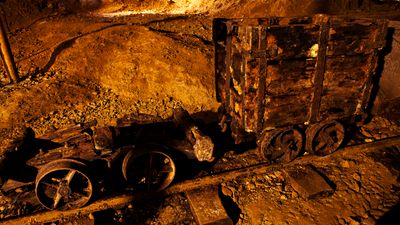
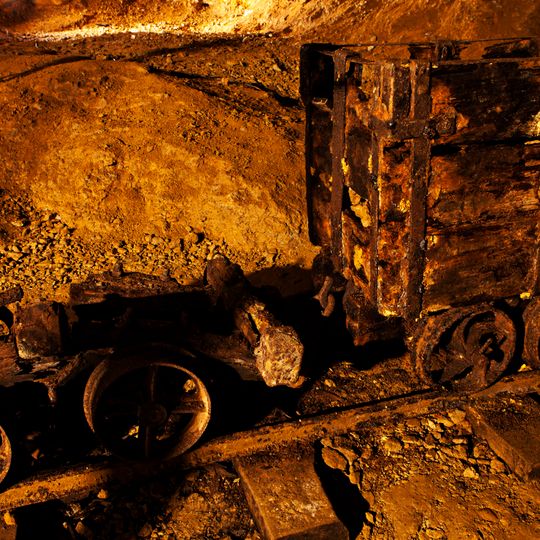
Tarnowskie Góry is an underground mining complex with roughly 150 kilometers of passages designed for extracting ore and managing water through a network of tunnels and shafts. The site includes mining chambers, drainage systems, and storage areas that operated together as a single industrial system.
Lead ore was discovered in 1526, starting centuries of mining that brought steady technological improvements to the region. The site continued expanding and being refined until ore extraction finally stopped in the 20th century.
The site's name comes from the town, whose Polish name means "Tarnowskie Mountains". Its mining knowledge travelled with workers moving between Poland, Germany, Bohemia, Hungary and Britain. In 2017 the mine was inscribed on the UNESCO World Heritage list at the 41st session held in Kraków, and in 2018 the Polish Tourist Organisation named the complex one of ten national attractions worth seeing that year.
The underground route covers about 1.7 kilometers, part of it by boat through flooded galleries. Temperatures stay low year-round, so bring a warm layer. The passages are narrow and uneven underfoot; sturdy shoes help. The site lies in Tarnowskie Góry, with parts in Bytom and Zbrosławice.
The water management system built roughly two centuries ago continues working today and supplies drinking water to local residents. Few historical engineering systems remain this functional after so much time.
The community of curious travelers
AroundUs brings together thousands of curated places, local tips, and hidden gems, enriched daily by 94,851 contributors worldwide.