Hohenzollerns Palace in Lwówek Śląski, Palace in Lwówek Śląski, Poland
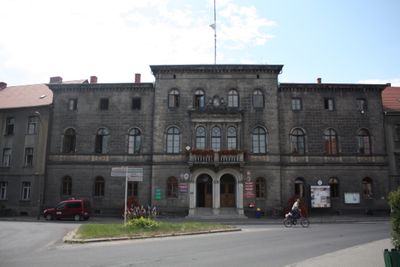
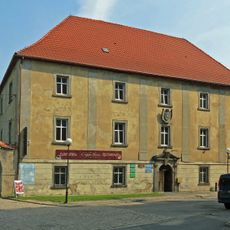
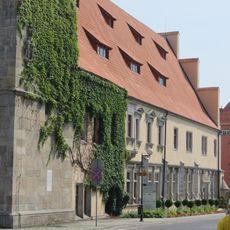
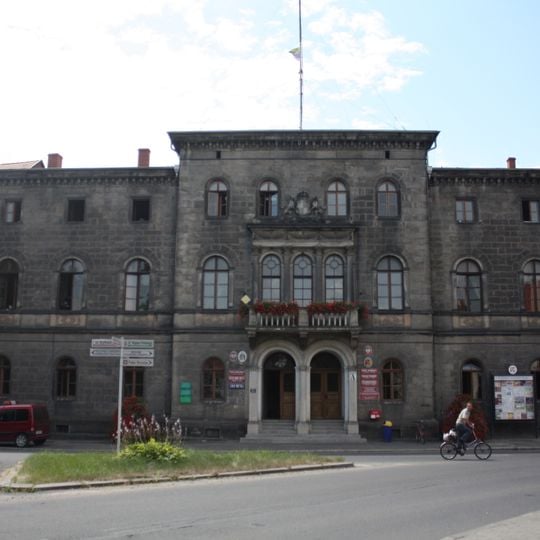
Hohenzollerns Palace is a three-storey classicist building erected in 1850–1852 from grey sandstone quarried in Sobota. Its main block held the prince's residence and guest rooms, while two attached buildings housed musicians and their families and two outer wings lodged the palace staff. Above the main entrance, a heraldic cartouche supported by two dogs bears the motto Nihil Absque Deo.
A German prince commissioned the building as a winter residence in the middle of the 1800s for himself and his family. The project took place between 1850 and 1852 under architect August Schüler's direction.
The palace's concert hall hosted a 45-member symphony orchestra brought from Hechingen by Prince Constantine; its first concert took place in December 1852, conducted by Thomas Täglichsbeck. Weekly concerts drew audiences from Wrocław to Dresden, and the press called Lwówek Śląski the 'Silesian Weimar'. The orchestra played its last season in 1868/1869 after the prince's death.
The building now serves as the town's municipal office, so visitors can view it from the outside while interior access depends on office hours. It received official heritage monument status in 2015.
The palace interiors were decorated with busts of musicians, and above the main entrance a heraldic cartouche held by two dogs, referring to the Hohenzollern coat of arms, carries the motto Nihil Absque Deo. The concert hall's decor was designed by architect August Schüler.
The community of curious travelers
AroundUs brings together thousands of curated places, local tips, and hidden gems, enriched daily by 94,320 contributors worldwide.