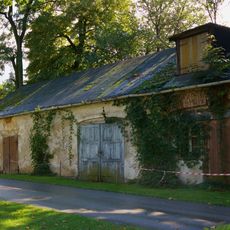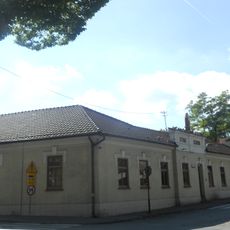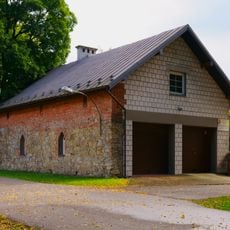
Manor in Sieraków, Manor house in Sieraków, Poland
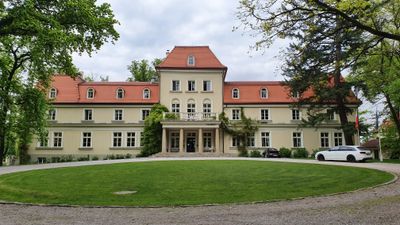
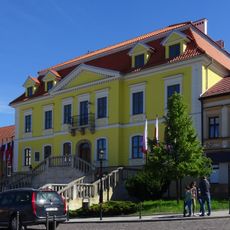
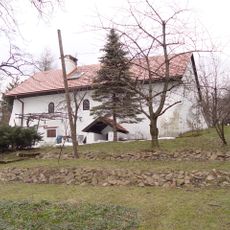
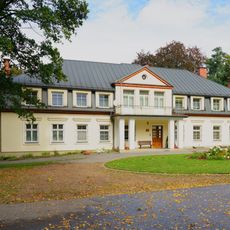
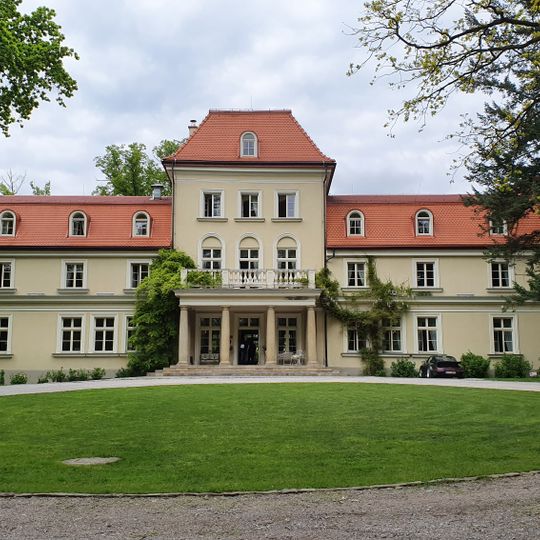
The Manor in Sieraków is a late-classicist brick residence built on a rectangular plan after the 1846 Galician slaughter destroyed the earlier wooden manor, rebuilt by Teodor Przychocki on the model of French residential architecture. A six-column portico with a terrace fronts the central avant-corps at the drive, while a two-column portico supports a first-floor bay on the garden side. Wings were added at the turn of the 20th century, and a 2006 rebuild turned the building into a hotel with 28 rooms.
Mikołaj of Sieraków raised a wooden manor on the hill in 1412, and the Sierakowski family held it until the end of the 15th century. In 1507 Jakub Lubomirski bought part of the village with Krzesławice and Zegartowice for 430 grzywnas. The manor was probably destroyed during the Galician slaughter of 1846; Teodor Przychocki rebuilt it as a late-classicist brick residence modelled on French architecture, and the Przychockis laid out an English-style park around it.
The manor houses a restaurant certified by Slow Food Polska that prepares dishes using regional ingredients and traditional Polish recipes. The kitchen connects historical cooking methods with local products from the surrounding area.
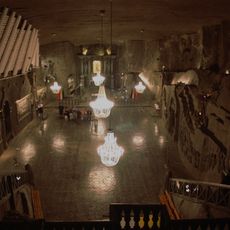
The parkland surrounding the property offers plenty of space to explore and enjoy the outdoors. The location near Krakow and Wieliczka Salt Mine makes it convenient for combining visits with other regional attractions.
During World War II the Germans ran a canteen in the manor, managed by a Pole named Tylman, who supplied them with food while cooperating with the Home Army and hiding Auschwitz-Birkenau escapees in the building. In 2005 the estate was bought by Karolina Grabowska, a former consul general of Uruguay, and Paweł Gąsiorek, president of the Dom Wina company.
The community of curious travelers
AroundUs brings together thousands of curated places, local tips, and hidden gems, enriched daily by 93,147 contributors worldwide.