Szeptycki Palace in Łaszczów, 18th-century palace in Łaszczów, Poland.
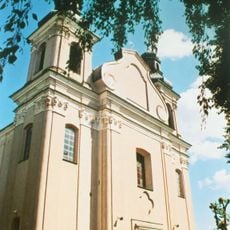
Szeptycki Palace is an 18th-century building in Łaszczów standing on spacious grounds with multiple structures from different periods. The complex contains sections of a former Jesuit church and residential buildings that show how the site evolved over time.
The cornerstone of a Jesuit church and college was laid on 15 September 1736, designed by Paweł Giżycki and Tomasz Żebrowski. The church was never finished; Franciszek Łukawski demolished its walls in 1818–1819 and converted the college for housing. A fire set by retreating Russian troops on 29 June 1915 destroyed the still-unfinished residence, and in 1926 the most damaged wing was dismantled.
The building's name recalls the Szeptycki family, who owned Łaszczów and used the former Jesuit college as a residence; Róża Szeptycka occupied the upper floor until the mid-19th century. The ground floor housed the communal court. After her death the building stood empty until Aleksander Szeptycki settled in Łaszczów. The ruin is now unvisitable, so these layers survive only in records and in the standing walls seen from outside.
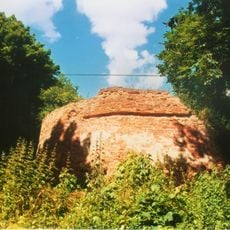
The palace is an abandoned ruin and cannot be entered; the surviving walls stand empty and unroofed after the 1915 fire and later demolitions. View it from the outside only, from public ground in Łaszczów, and keep to a distance from the unstable masonry. No facilities or marked visitor route exist at the site.
The Jesuit church begun here in 1736 was never finished; its walls stood roofless in 1773 and Franciszek Łukawski demolished them in 1818–1819. During World War II German troops took the remaining church masonry and used it to build the road to Dołhobyczów, so the church survives only in the palace's fabric.
The community of curious travelers
AroundUs brings together thousands of curated places, local tips, and hidden gems, enriched daily by 94,661 contributors worldwide.