Kościół Wniebowzięcia Najświętszej Maryi Panny w Wierzbnej
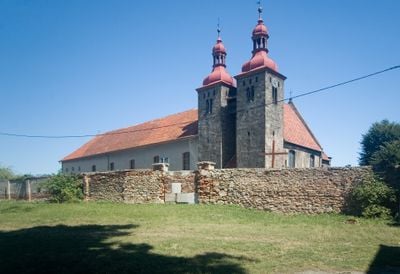
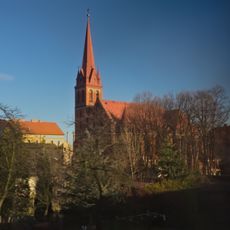
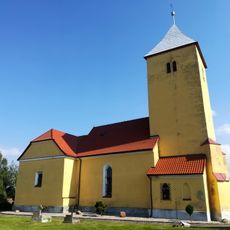
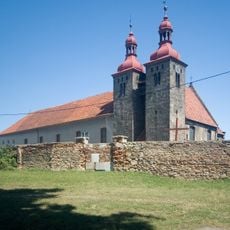
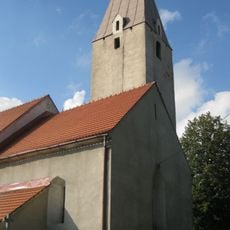
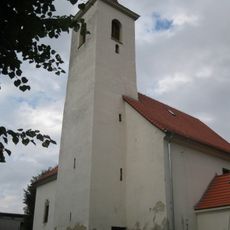
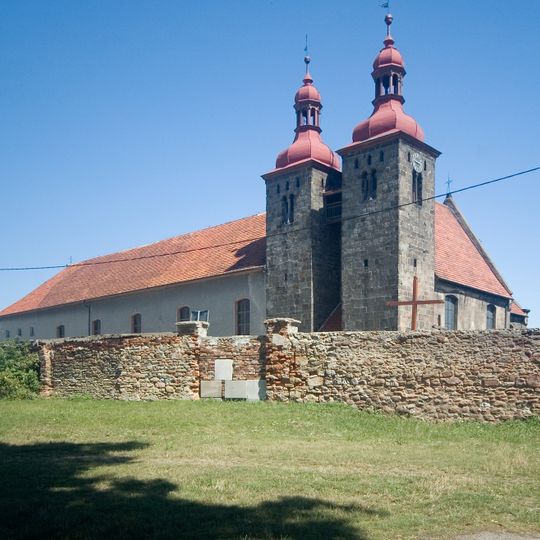
The Church of the Assumption of Mary in Wierzbna is a 13th-century building in a small village in Lower Silesia. Its structure has two plain towers on the front side, with later Baroque additions that expanded the interior, creating a mix of Romanesque and later architectural styles.
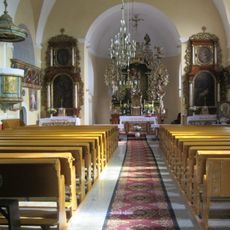
The Romanesque church was built between 1230 and 1250 and first mentioned in 1283. In 1357 it passed to the Cistercians of Kamieniec Ząbkowicki, and in 1585 to the Cistercians of Krzeszów, who held it until the Prussian authorities dissolved the order in 1810. In 1729–1730 the Krzeszów Cistercians added a Baroque nave on the north side, after which the original Romanesque building served as a chapel and organ loft.
The church's dedication to the Assumption of Mary reflects a central Catholic tradition that shaped the spiritual life of generations here. The plain exterior and modest interior decorations show how this place served the everyday faith of the local community rather than seeking grandeur.
The church stands in Wierzbna, with a stone figure of St John of Nepomuk at the fork of the roads in front of it. The Romanesque core serves as a chapel and organ loft for the Baroque nave added on the north side, so visitors pass from the older, lower space into the larger hall. Stone epitaph plaques are set into the outer wall, and a medieval penitential cross stands by the road toward Gołaszyce.
Medieval wall paintings were plastered over for centuries and only uncovered between 1960 and 1962, with restoration finished in 1969. They come from three periods: late Romanesque work of the second half of the 13th century, 15th-century Gothic scenes of the Last Judgment, and late Gothic painting from the first half of the 16th century.
The community of curious travelers
AroundUs brings together thousands of curated places, local tips, and hidden gems, enriched daily by 94,401 contributors worldwide.