Anta das Pedras Grandes, Neolithic dolmen in Caneças, Odivelas, Portugal
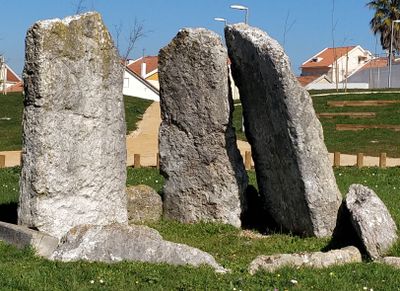
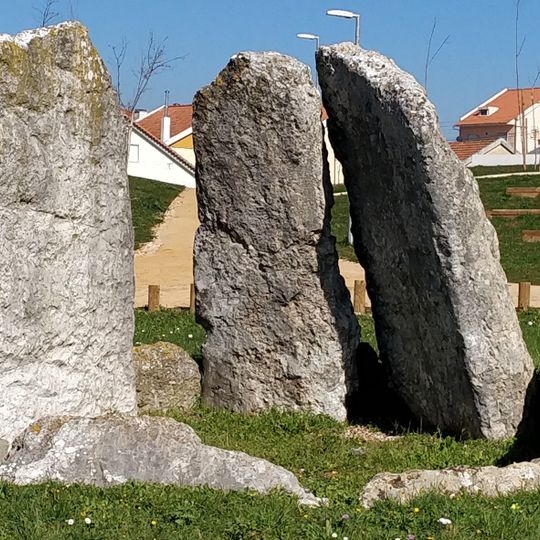
Anta das Pedras Grandes is a Late Neolithic dolmen in Casal Novo, Caneças, consisting of a polygonal chamber with eight standing stones about 3 metres tall and a short access corridor. Traces of a tumulus remain, and the stones, all fallen before 2018, were re-erected when the surrounding urban park opened.
Built in the Late Neolithic, between 4500 and 2000 BC, the dolmen was first identified in 1880 by the Portuguese archaeologist Carlos Ribeiro. It was classified as a National Monument in 1944. Excavations in the early 21st century found human bones and traces of a tumulus, and the fallen stones were later lifted during the creation of the park opened in late 2018.
The name anta is the Portuguese term for the roughly 5,000 megaliths built in Portugal during the Neolithic. The monument is the only surviving dolmen in the immediate area, though several others were found in the late 19th and early 20th centuries. Since late 2018 it has been the centrepiece of a small urban park.
The dolmen stands in a small urban park in Caneças, opened in late 2018, with the eight lifted stones arranged around the chamber and short corridor. The park is a neighbourhood space rather than a staffed site, so there are no guided tours or facilities; the stones stand outdoors and can be seen at any time of day. Look for the flint chippings and the traces of the original tumulus around the base of the supports.
The monument is the only surviving dolmen in the immediate area; several others were found in the late 19th and early 20th centuries but did not survive. Its stones were also taken by farmers and builders over the years, and all remaining stones had fallen before being lifted during the 2018 park works.
The community of curious travelers
AroundUs brings together thousands of curated places, local tips, and hidden gems, enriched daily by 93,124 contributors worldwide.