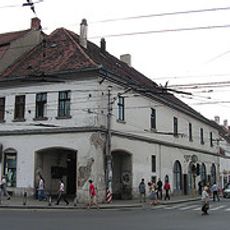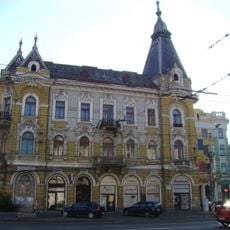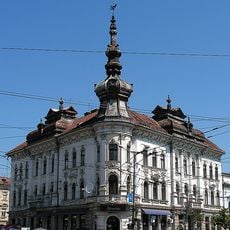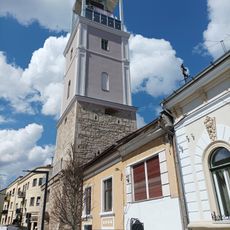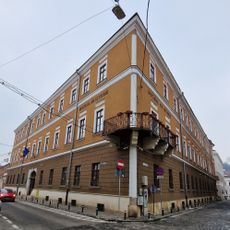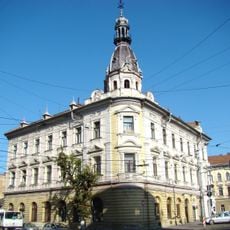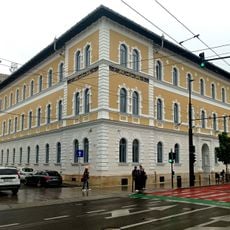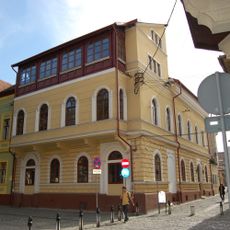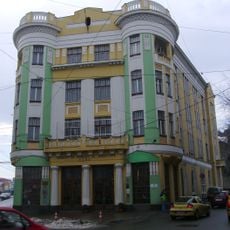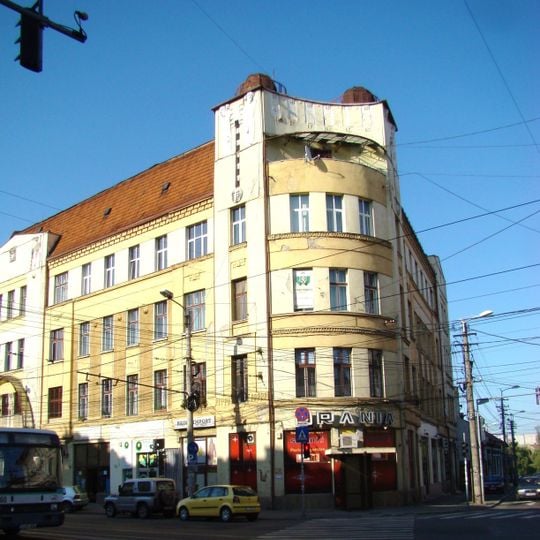
Urania Palace in Cluj-Napoca, Historic monument on Horea Street, Cluj-Napoca, Romania.
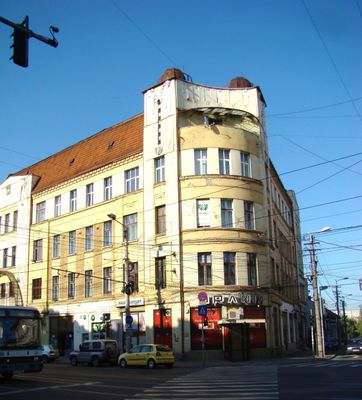
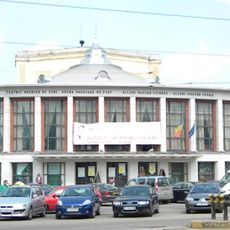
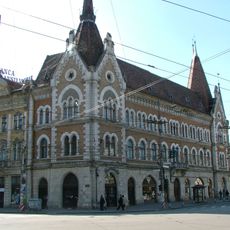
The Urania Palace at Horea Street 4 stands on the corner with Dacia Street as a three-storey building in the Viennese Secession style, designed by Géza Kappeter with József Steiner of Arad. Its upper facade carries a row of large white half-reliefs arranged symmetrically under a curved glass canopy, symbolising work and science. The building originally held 17 apartments, 10 shops facing the two streets, and a 400-seat cinema.
Udvari András, a Cluj blacksmith and carriage maker, screened films in a tent in his workshop yard before opening this building on 10 December 1910. It held 17 apartments, 10 shops and a 400-seat cinema. A fire destroyed the roof on 9 January 1927. The cinema was renamed 23 August after 1948 nationalisation, then Favorit in 1990.
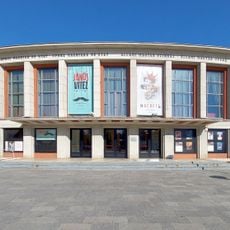
The cinema opened in 1910 as Uránia, was renamed Árpád between 1943 and 1945, became Uránia again in 1945, 23 August after nationalisation in 1948, and Favorit from 1990. Since 2015 the hall has operated as Centru Cultural Urania Palace. The name Urania refers to the cinema, not to the building's later uses.
The palace stands at the corner of Horea Street and Dacia Street, a short walk from the city centre. The cinema hall inside seats 400 and now serves as the Urania Palace Cultural Centre, so it is worth checking the programme before travelling. The building is listed as monument CJ-II-m-B-07349.
The palace is the sister project of Vienna's Urania. Its upper facade carries a row of large white half-reliefs beneath a curved glass canopy, arranged symmetrically and symbolising work and science. In 1910 the Kolozsvári Hírlap reported public demands that the reliefs of nude men be removed.
The community of curious travelers
AroundUs brings together thousands of curated places, local tips, and hidden gems, enriched daily by 93,622 contributors worldwide.