Šabac Fortress, Medieval fortress overlooking Sava River in Šabac, Serbia.
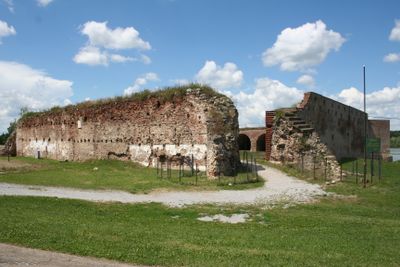
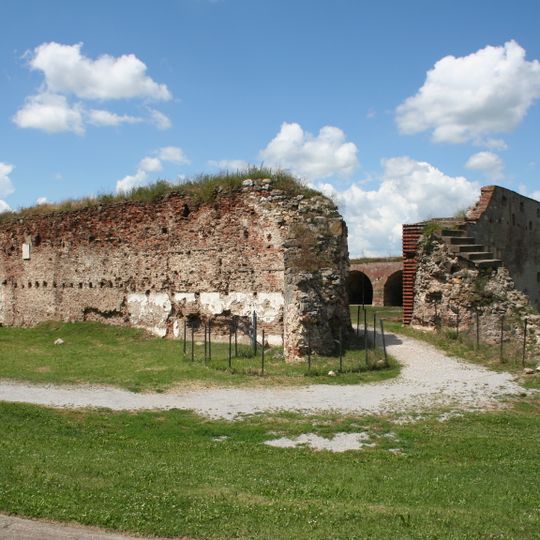
Šabac Fortress is a ruined quadrilateral fortification on the Sava riverbank, of which only the southern half survives, with two round towers about 10 m in outer diameter and a connecting rampart; the northern half was carried away by the Sava. Its ground plan, roughly 60 m on a side, resembles the Zemun and Kladovo forts along the Sava and Danube.
Built in 1471 on the Sava bank by forced labour (kuluk) under Ottoman orders, the fortress was named Böğür Delen, 'the side-piercer', for its role of attacking the flank of forces moving on Belgrade. Hungarian troops under Matthias Corvinus took it in 1476 after a 33-day siege and garrisoned 100 Serbian šajkaši boatmen there. On 7 July 1521, during Suleiman's Belgrade campaign, the third vizier Ahmed Pasha retook it for the Ottomans.
The fortress displays building styles from different periods, as Turkish and Austrian rulers reshaped it one after another. Walking along the walls, you can see the different construction phases and techniques that each occupying force left behind.
The site is open year-round and can be explored from several vantage points without requiring special equipment. The grounds have uneven grass-covered terrain with some steep paths, so comfortable walking shoes are recommended.
The fortress's Ottoman name, Böğür Delen, means "flank piercer", showing it was built to strike the flank of forces moving along the main Belgrade axis. The Hungarians took it in 1476 after a 33-day siege and garrisoned it with 100 Serbian šajkaši boatmen, who held it until Ottoman forces under Ahmed Pasha retook it on 7 July 1521.
The community of curious travelers
AroundUs brings together thousands of curated places, local tips, and hidden gems, enriched daily by 94,209 contributors worldwide.