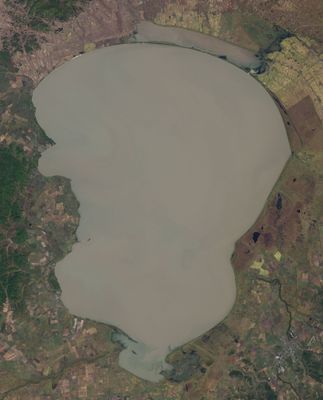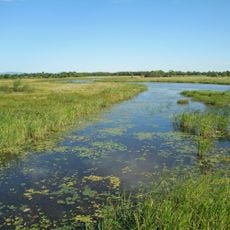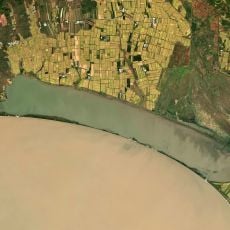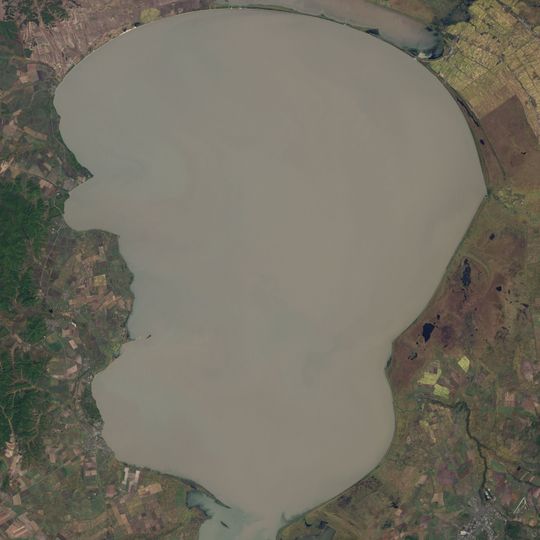
Khanka, Ramsar wetland at Russian-Chinese border, Primorsky Krai and Heilongjiang.
Khanka is a freshwater lake at the Russian-Chinese border in Primorsky Krai and Heilongjiang, covering over 4,000 square kilometers. The larger portion lies on the Russian side, with wide reed belts and shallow areas stretching along the shoreline.
Lake Khanka is an ancient lake whose old name Khankai-Omo means "Sea of bird feathers"; in the Middle Ages its fish supplied the tables of Chinese and Jurchen emperors. Nikolay Przhevalsky visited it in 1868 and described its flora and fauna, and Vladimir Arsenyev made his first expedition there in 1902. In 1935 the Lake Khanka incident, a clash between Soviet and Japanese troops, took place west of the lake.
Vladimir Arsenyev linked the name Khanka to the Chinese word khanhai, meaning a hollow or low-lying basin. An older name, Khankai-Omo, translates as "Sea of bird feathers". In the Middle Ages, fish from the lake supplied the tables of Chinese and Jurchen emperors.
The area is a Ramsar wetland under special regulations, so visitors should check access conditions beforehand. Most activities are limited to nature observation and birdwatching in designated zones.
Shen Kuo's Dream Pool Essays, an 11th-century Chinese text, records a shining object seen near Xingkai Lake during Emperor Renzong's reign (1022–1063): it opened, cast silver-white light that threw tree shadows for ten miles, then descended onto the lake. A poet of Gaoyou, Yibo, wrote a poem about the "pearl".
The community of curious travelers
AroundUs brings together thousands of curated places, local tips, and hidden gems, enriched daily by 93,579 contributors worldwide.