Volyshevo estate, Federal cultural heritage estate in Volyshovo, Russia.
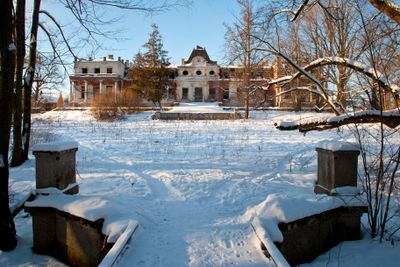
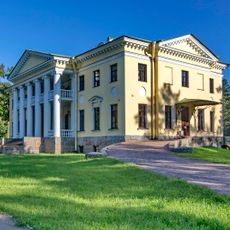
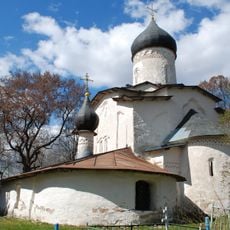
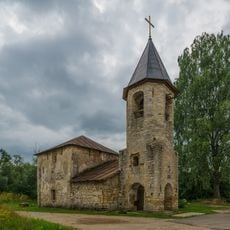
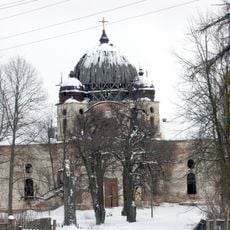
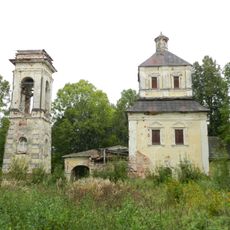
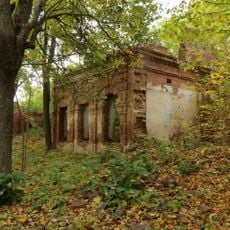
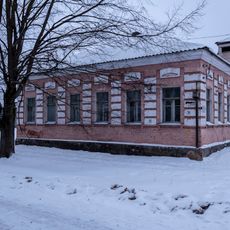
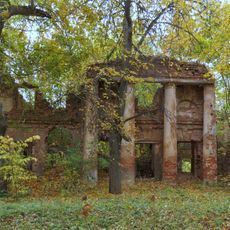
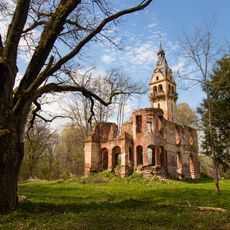
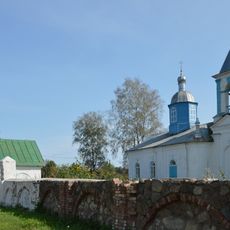
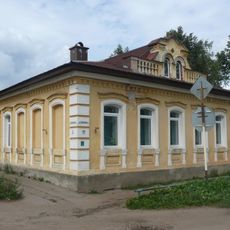
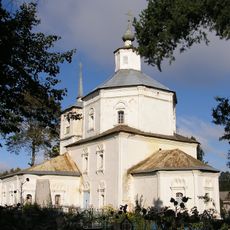
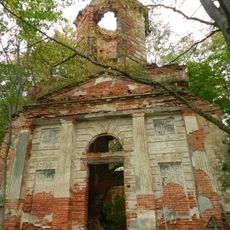
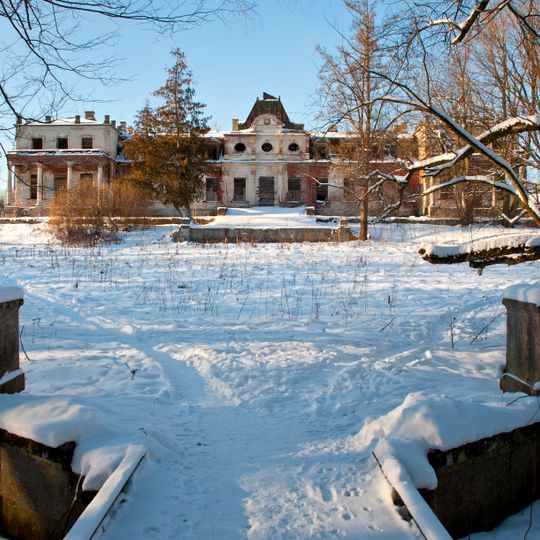
Volyshevo estate is a former hunting and horse-breeding estate in the village of Volyshovo, Porkhov district, Pskov oblast. Its central ensemble comprises 12 buildings, including the main house, an 'English cottage', a stone gazebo with a dovecote, the 'countess's house', a riding hall and a church; the whole estate counts 46 structures. The main house, about 1,300 m², has a Baroque central section and Neoclassical wings, and was built in stone by architect Carl Schmidt for Count Sergei Stroganov.
In the late 18th century the village belonged to Tatiana Ovtsyna, and by 1800 to her daughter Ekaterina Vasilchikova. Her son General D. V. Vasilchikov inherited the estate in 1830. In the 1860s architect M. A. Makarov designed a new manor house for Count A. S. Stroganov, and under S. A. Stroganov it was rebuilt in stone by Karl Schmidt. In 1889 Stroganov founded a stud farm; after 1917 the estate housed a agricultural institute, later a school, and a fire in 2018 left the main house acutely unsafe.
The estate's name comes from the village of Volyshovo, held in 1800 by Yekaterina Vasilchikova; her son General D. V. Vasilchikov inherited it in 1830. Count Sergei Stroganov, who settled here after leaving the army, funded roads around his lands, schools for peasant children and a school in Pskov, and was made an honorary magistrate by the Pskov district council. In the 1880s the hunting parties brought together Stroganov, Prince Boris Vasilchikov and Prince Pavel Galitzine.
The estate lies in the village of Volyshovo, Porkhov district, Pskov oblast. The main house was rated acutely unsafe after a fire on 2 July 2018, and conservation work on it began in summer 2020, so the building should be viewed from outside. The 1960-1963 restoration touched the Church of the All-Merciful Saviour and the wings, not the main house.
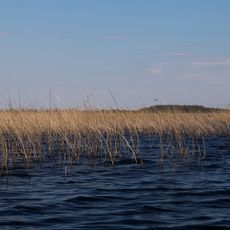
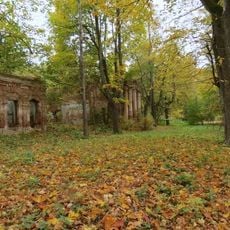
The park held around two hundred species of trees and shrubs, with alleys of larch, lime and fir and groves of maple, birch, spruce and oak. A system of ponds used granite dams to control the water level, and an artificial island was built in the middle of the large pond.
The community of curious travelers
AroundUs brings together thousands of curated places, local tips, and hidden gems, enriched daily by 93,644 contributors worldwide.