Zawołocze, Medieval castle ruins in Pustoshkinsky District, Russia.
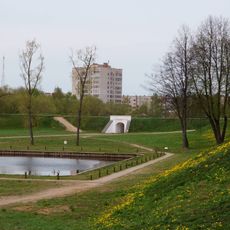
Zawołocze is a former wooden fortress on most of an island in Lake Podtso, Pustoshkinsky District, 12 km from Pustoshka. Its perimeter measures 900 m: a rectangular earth rampart, higher than those of other Pskov fortresses to stop cannonballs, carried wooden walls and nine round towers, four larger at the corners. The east gate faced a bridge to the shore; the west gate was a reserve sally port. Inside stood the governor's court and the Church of the Intercession.
The fortress was built in 1536 as a defensive stronghold and changed hands between Russian and Lithuanian forces before becoming permanently Russian in 1582. During these conflicts, it served as a key point in the territorial struggles of the region.
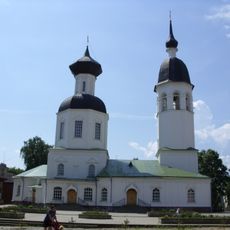
The fortress held the district centre transferred from Rzheva Pustaya, with two namestniks appointed and the residents resettled there in 1536. Inside stood the namestnik's court and the Church of the Intercession of the Theotokos with two side chapels, built together with the fortress; its site is traced today by scattered stones.
The fortress site lies on a peninsula in Lake Podtso, 12 km from Pustoshka. The perimeter of the hillfort is 900 m; its earthen ramparts are higher than those of other Pskov fortresses because they were built to absorb cannonballs. The cultural layer was lost to ploughing, but the lines of two streets and the site of the Pokrovskaya Church can still be traced from individual stones.
The fortress stood on Bolshoy Island in Lake Podtso, 12 km from Pustoshka; a causeway built between island and shore in the 19th century turned it into a peninsula. Its earthen rampart was higher than those of other Pskov fortresses because the walls were banked with earth to stop cannonballs, a design historian Mikhail Vasilyev compared to Ivangorod.
The community of curious travelers
AroundUs brings together thousands of curated places, local tips, and hidden gems, enriched daily by 94,501 contributors worldwide.