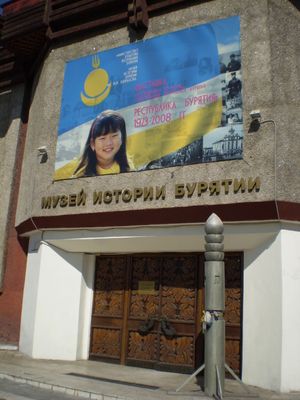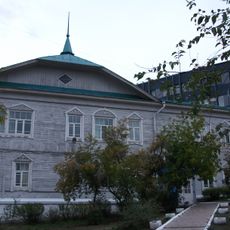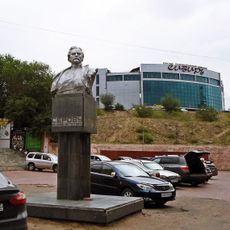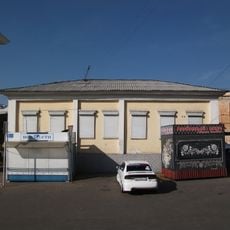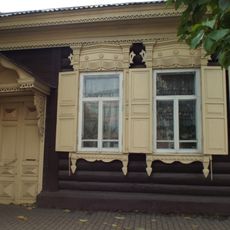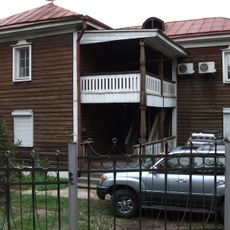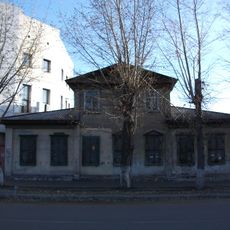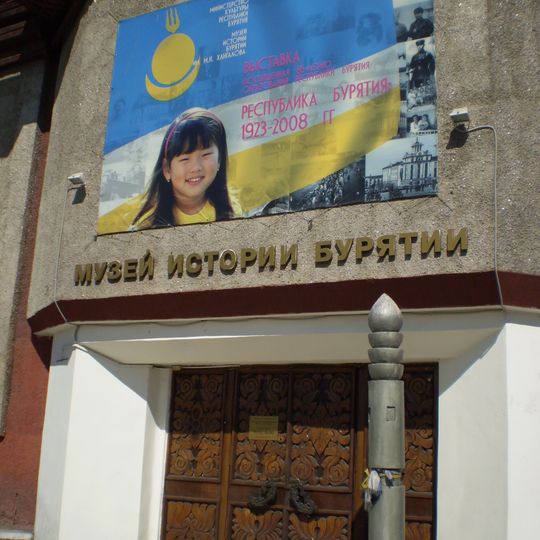
Museum of the History of Buryatia, Regional history museum in Ulan-Ude, Russia.
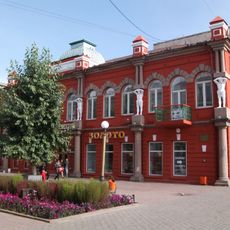
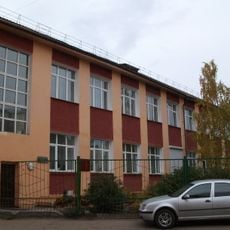
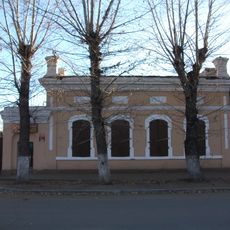
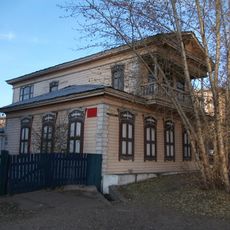
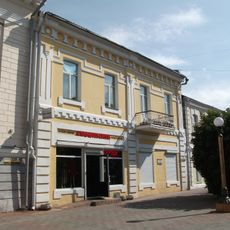
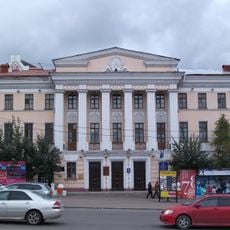
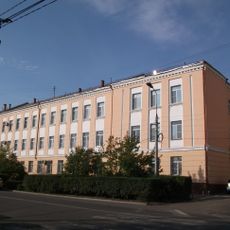
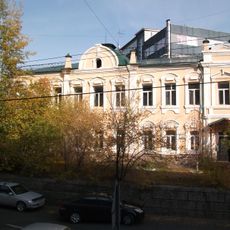
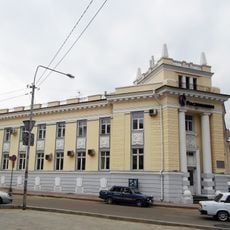
The Museum of the History of Buryatia named after M. N. Khangalov occupies the former trading arcade of merchant Vtorov at 21 Lenina Street in Ulan-Ude. Its holdings, over 100,000 items, are kept in 462 m² of storage space, while the display area totals 1,600 m². Exhibits trace the ethnogenesis of the Buryat people, the Evenk and Russian populations, and the Soviet period.
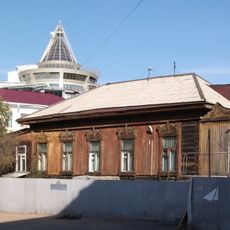
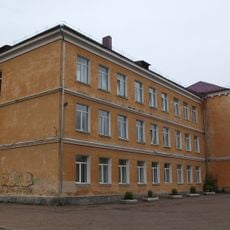
The museum grew out of the Society for the Study of the Baikal Region, whose first meeting was held on 9 May 1919. In 1921 the Baikal Regional Museum opened in the former Realschule at Lenina 11, and in 1923 it was reorganised as the Buryat-Mongolian National Museum. It moved into the former Vtorov trading arcade at Lenina 21 in 1924, and from 2011 has been part of the National Museum of the Republic of Buryatia.
The collection features Buddhist ritual objects, traditional clothing and everyday items of the Buryat people that are rarely displayed together in one place. Walking through the rooms gives a clear sense of how closely Buddhism and daily life remain connected in this region.
A morning visit works well when the rooms are less crowded and you can move through the floors at your own pace. Because the displays include a lot of written material, plan to spend a good amount of time to take everything in comfortably.
The museum holds a 76-illustration Atlas of Tibetan Medicine, copied in the late 19th century under Agvan Dorzhiev (1853–1938), who served as finance minister in Tibet under the 13th Dalai Lama. The set reproduces 1686–1689 paintings made for the "Blue Beryl" treatise and was used to teach monks at the Tsugol datsan from 1896.
The community of curious travelers
AroundUs brings together thousands of curated places, local tips, and hidden gems, enriched daily by 95,057 contributors worldwide.