Blonie garden, Regional heritage park in Smolensk, Russia
Blonie garden is a city park in Smolensk with established walking paths and planted areas spread across the grounds. The layout features open spaces and tree-lined sections that create varied scenery throughout the site.
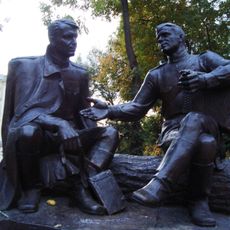
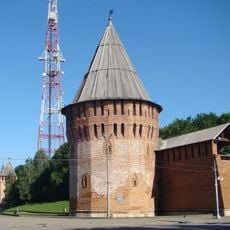
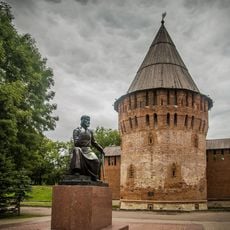
The garden was officially laid out in 1830 by order of Emperor Nicholas I on a flat parade ground by the Smolensk fortress walls, with governor Nikolai Khmelnitsky overseeing the work. In 1885 a monument to composer Mikhail Glinka was unveiled here, and the park was later named after him. After World War II, a bronze deer and two lions taken from Hermann Göring's estate were installed as trophies.
The garden is named after composer Mikhail Glinka, whose bronze monument was unveiled here in 1885; loudspeakers installed in the late 1970s regularly play his music. The name Blonie comes from the old Russian word bolonye, meaning an open flat space before a fortress, as this ground served for drilling soldiers.
The park is accessible on foot from central Smolensk and has clear entry points from surrounding streets. Walking paths remain open throughout the year, though conditions vary with the seasons.
The bronze deer standing here since 1945 is a trophy taken from Hermann Göring's estate in East Prussia; for a time it bore the inscription "A gift from East Prussia to the children of Smolensk from the guardsmen of a certain corps". Two lions were installed alongside it.
The community of curious travelers
AroundUs brings together thousands of curated places, local tips, and hidden gems, enriched daily by 94,141 contributors worldwide.