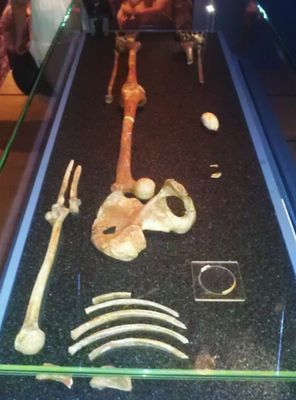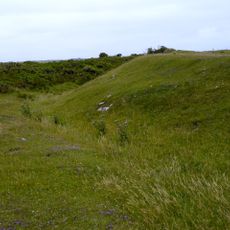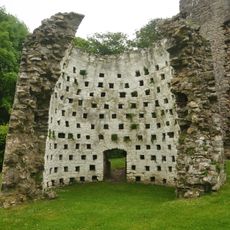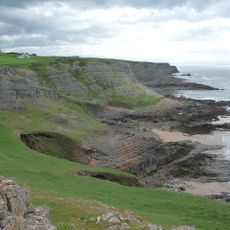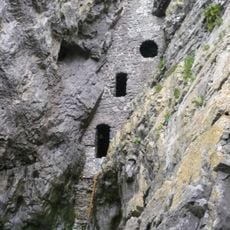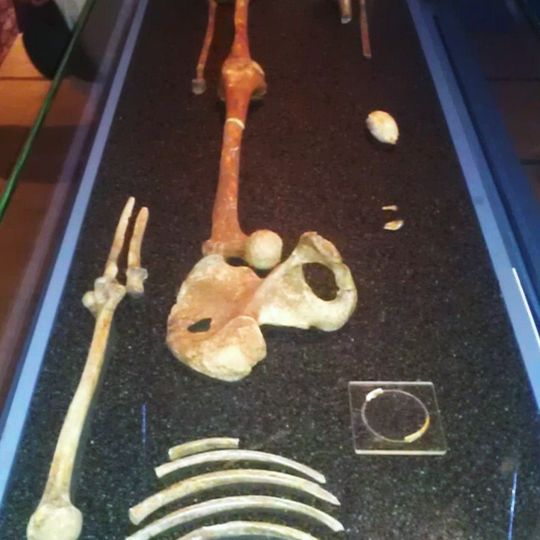
Red Lady of Paviland, Hominin fossil in Goat's Hole Cave, Gower Peninsula, Wales.
The Red Lady of Paviland is skeletal remains of a young male hunter-gatherer whose bones were covered with red ochre pigment and discovered within a limestone cave system. The remains are now housed at Oxford University Museum of Natural History, while additional artifacts are displayed at Swansea Museum.
William Buckland uncovered the remains in 1823 during an archaeological excavation and initially mistook them for a Roman-era female because of the ornamental items. This misidentification led to the name by which the remains are still known today.
The burial site contains shell beads, mammoth ivory ornaments, and over 4000 worked flint tools suggesting elaborate burial rituals. These objects show that people at that time possessed sophisticated craftsmanship and complex beliefs about honoring the dead.
The skeletal remains can be viewed at Oxford University Museum of Natural History, which is easily accessible and displays other prehistoric finds. Visiting allows you to learn about multiple time periods in one location.
Protein analysis reveals the individual regularly consumed fish, making up about one-fifth of the diet, in addition to mammoth and reindeer meat. This diet hints at access to rivers or coastal areas and adapted hunting and gathering strategies.
The community of curious travelers
AroundUs brings together thousands of curated places, local tips, and hidden gems, enriched daily by 90,858 contributors worldwide.