Kelso Abbey, Romanesque abbey in Kelso, Scotland
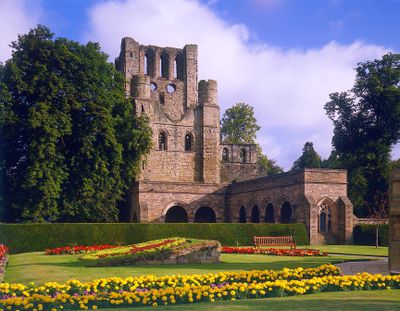
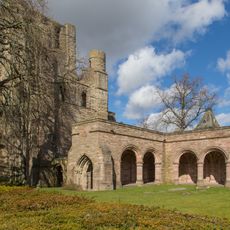
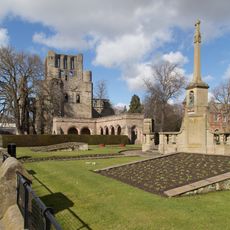
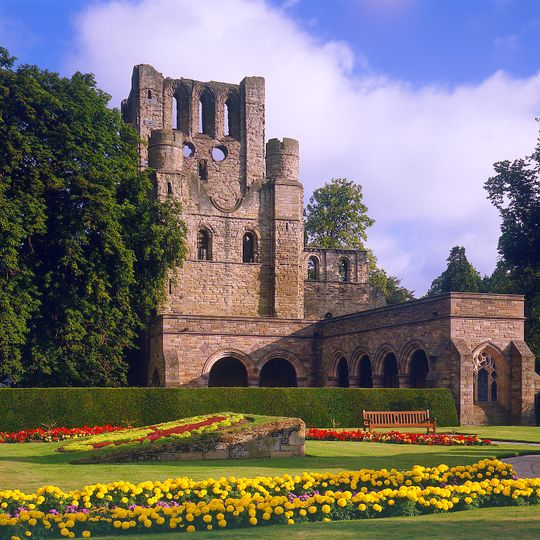
Kelso Abbey is a monastery in the Scottish Borders featuring massive stone walls, rounded arches, and western towers positioned above the junction of the rivers Tweed and Teviot. The remains clearly show the structure that monks inhabited and used for centuries.
The abbey was founded in 1101 by King David I of Scotland, who relocated Tironensian monks from Selkirk to strengthen religious presence in the Borders. This establishment made the site a long-lasting center for monastic life in southern Scotland.
The monastery served as a center for manuscript production and learning, where monks developed agricultural innovations that shaped farming practices in the region. This role as a spiritual and intellectual hub made the place important to communities living nearby.
The abbey ruins remain accessible year-round without entrance fees, with informational panels explaining the architectural features on site. Visitors should expect uneven ground surfaces and wear comfortable shoes, especially if rain has made the ground slippery.
The western facade blends elements of Romanesque and early Gothic design, making it an unusual example of architectural transition in Scotland. This mixture of two styles in one structure is rare and shows how building techniques evolved during the monastery's long use.
The community of curious travelers
AroundUs brings together thousands of curated places, local tips, and hidden gems, enriched daily by 60,000 contributors worldwide.