Jarlshof, Archaeological site in Dunrossness, Shetland Islands, United Kingdom.
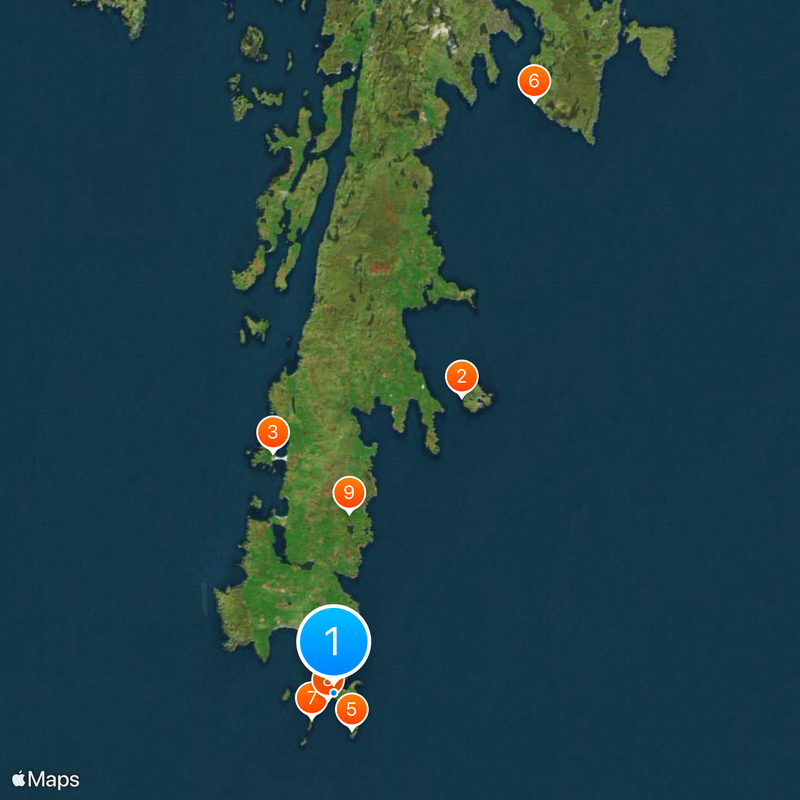
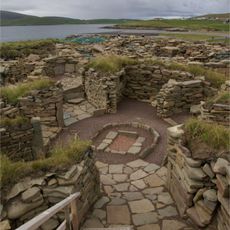
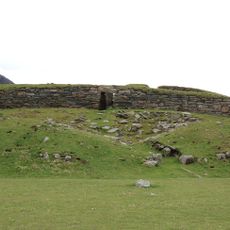
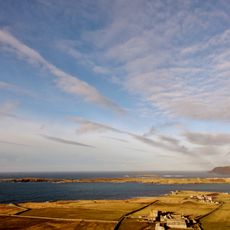
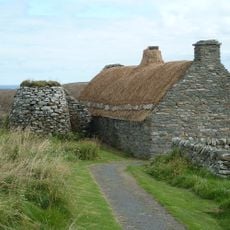
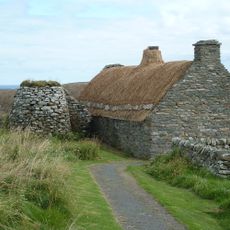
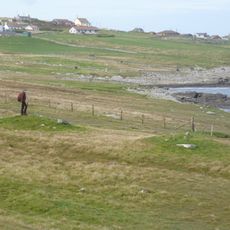
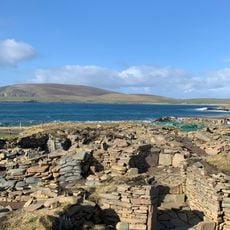
Jarlshof is an archaeological site in Dunrossness, Shetland Islands, United Kingdom, displaying the remains of buildings from several eras. Visitors can identify the foundations of oval prehistoric dwellings, a circular drystone broch, and rectangular longhouses with thick stone walls, all arranged across multiple terraces near the edge of a bay.
The settlement began around 2500 BCE with simple stone houses and continued through the Bronze Age, Iron Age, and Pictish period. Norse settlers built their longhouses here from the 9th century onward, and later a medieval farmstead occupied the site until the 17th century.
The site owes its name to a 19th-century novelist, Walter Scott, who invented the word for a fictional estate in one of his novels. The label was later adopted by archaeologists and now refers to a complex where visitors can see the floor plans of different house types side by side, from oval stone huts to the elongated structures of Norse settlers.
The complex is accessible throughout the year, and a small visitor center displays finds and panels about the settlement history. Between April and September, opening hours are longer, allowing daylight exploration of the different levels of the site.
In the late 1800s, a coastal storm uncovered the hidden structures when waves stripped away large amounts of sand and soil. Before that, no one suspected that multiple layers of human dwellings lay concealed beneath the turf.
The community of curious travelers
AroundUs brings together thousands of curated places, local tips, and hidden gems, enriched daily by 90,814 contributors worldwide.