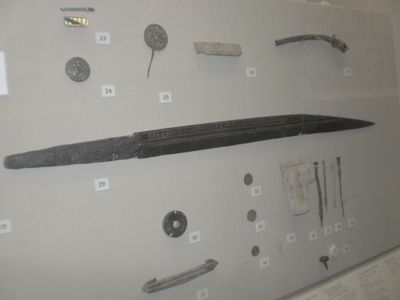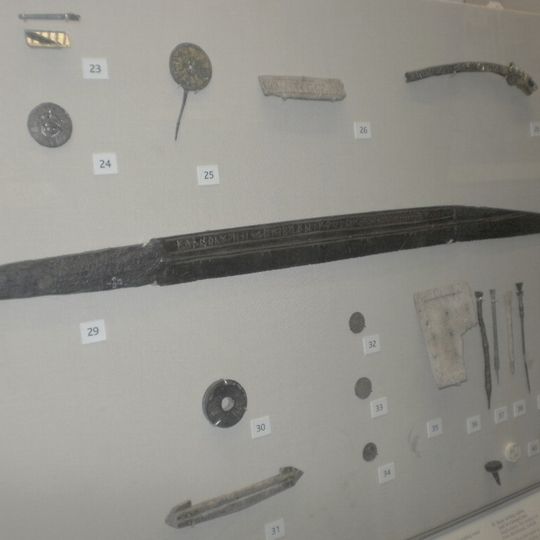
Seax of Beagnoth, Anglo-Saxon seax in British Museum, UK.
The Seax of Beagnoth is an Anglo-Saxon seax held at the British Museum, crafted from iron, silver, and copper alloy materials. The blade measures approximately 73 centimeters in total length and features intricate inlays of copper, bronze, and silver wire throughout its surface.
The seax was discovered in the River Thames in 1857 and dates to the Anglo-Saxon period around 1000 AD. This find is significant for understanding the metalworking techniques and writing cultures of that era.
The blade displays the complete Anglo-Saxon runic alphabet with 28 characters, offering insights into the writing systems of medieval England. Such runic inscriptions were rarely found on weapons in daily use, making this piece a valuable record of literacy during that era.
The museum maintains this object in controlled conditions to preserve its metallic components and detailed inscriptions for future study. When visiting, plan enough time to examine the fine decorative details from different viewing angles.
The name Beagnoth appears in runic letters on the blade and may refer to either the original owner or the craftsperson who created it. Such personalization was unusual for the period, suggesting the high value and status of this object.
The community of curious travelers
AroundUs brings together thousands of curated places, local tips, and hidden gems, enriched daily by 90,796 contributors worldwide.