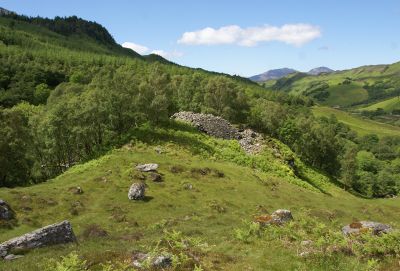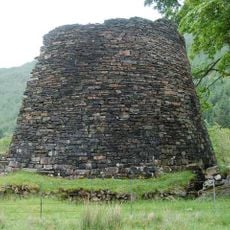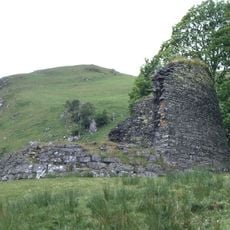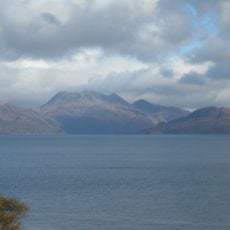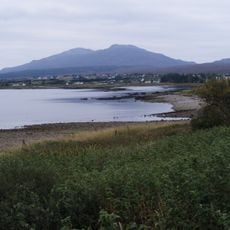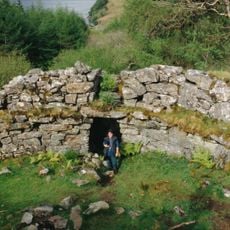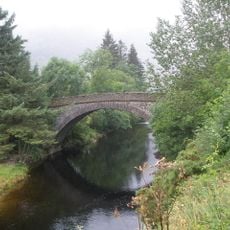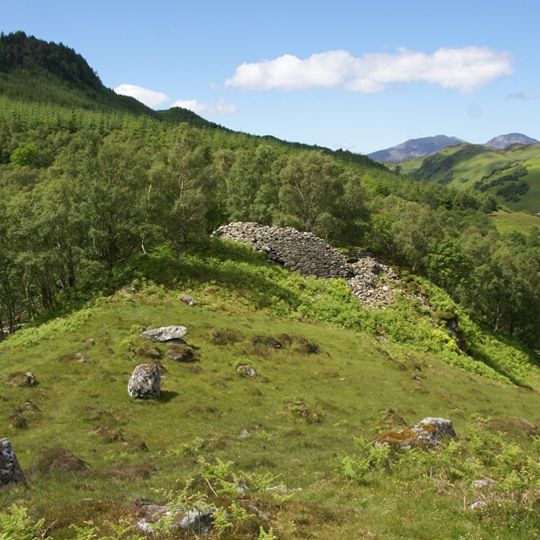
Dun Grugaig, Iron Age fortification in Glenelg, Scotland.
Dun Grugaig is a D-shaped stone ruin with walls measuring roughly 17 meters by 12 meters, featuring thick defensive structures with passages and chambers built into their thickness. The layout shows typical Iron Age fortification design with a complex interior arrangement.
The structure was first recorded in writing in 1720 by Alexander Gordon under the name Castle Chonil, distinguishing it from other regional fortifications. This early documentation helped establish its importance in Scottish archaeology.
Local folklore links this place to a witch named Grugaig, whose legendary sons supposedly gave their names to nearby brochs Dun Telve and Dun Troddan. These stories show how ancient sites remain woven into Scottish tradition and connect people to the land.
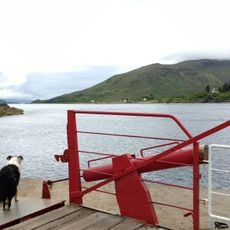
Access is via a path from Totaig ferry terminal, which involves gaining elevation over a moderate distance. Wear sturdy footwear and weather-appropriate clothing, as the trail can be steep and muddy depending on conditions.
The fort features an unusual layout with its straight wall facing a steep slope, incorporating natural terrain into its defense strategy. This clever use of the landscape shows the builders understood site conditions well.
The community of curious travelers
AroundUs brings together thousands of curated places, local tips, and hidden gems, enriched daily by 91,849 contributors worldwide.