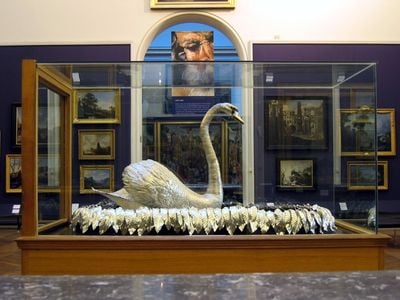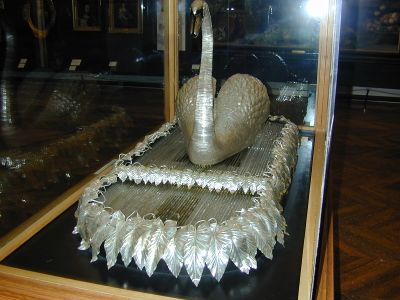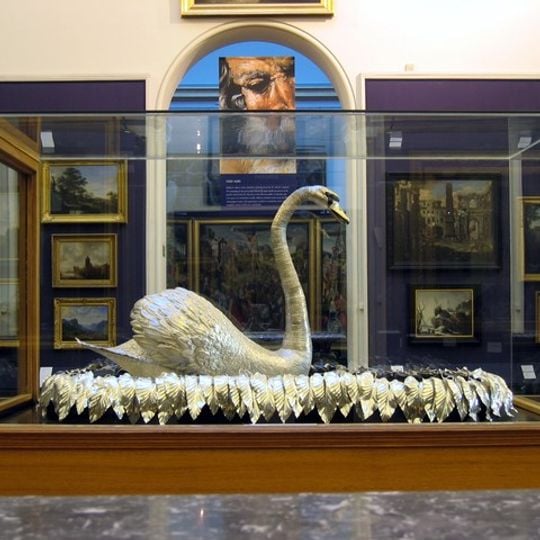
Silver Swan, Mechanical automaton at Bowes Museum, England
The Silver Swan is a mechanical device from the 1700s housed at Bowes Museum, crafted from silver exterior with brass components inside. It rests on a base designed to represent a small pond, with tiny silver fish visible beneath glass rods.
The device was engineered in 1773 by London jeweler James Cox and inventor Joseph Merlin. It first appeared in exhibitions across Europe during the late 1700s, drawing the attention of visitors who marveled at its working mechanisms.
The Silver Swan represents a blend of craftsmanship and entertainment from its era, showing how mechanical skill was used to create objects that combined beauty with function. Visitors see it as an expression of what fascinated people about nature and technology during the 1700s.
The mechanism performs a sequence of movements where the neck bends, fish are caught, and music plays from within its body. Allow yourself time to observe the full performance from different angles to appreciate the coordination of all its parts.
The Swan was displayed at major exhibitions where it caught the attention of notable thinkers and writers, reflecting its importance beyond mere mechanics. Its ability to coordinate multiple movements simultaneously was remarkably advanced for its era.
The community of curious travelers
AroundUs brings together thousands of curated places, local tips, and hidden gems, enriched daily by 91,372 contributors worldwide.