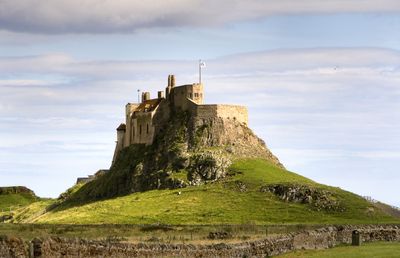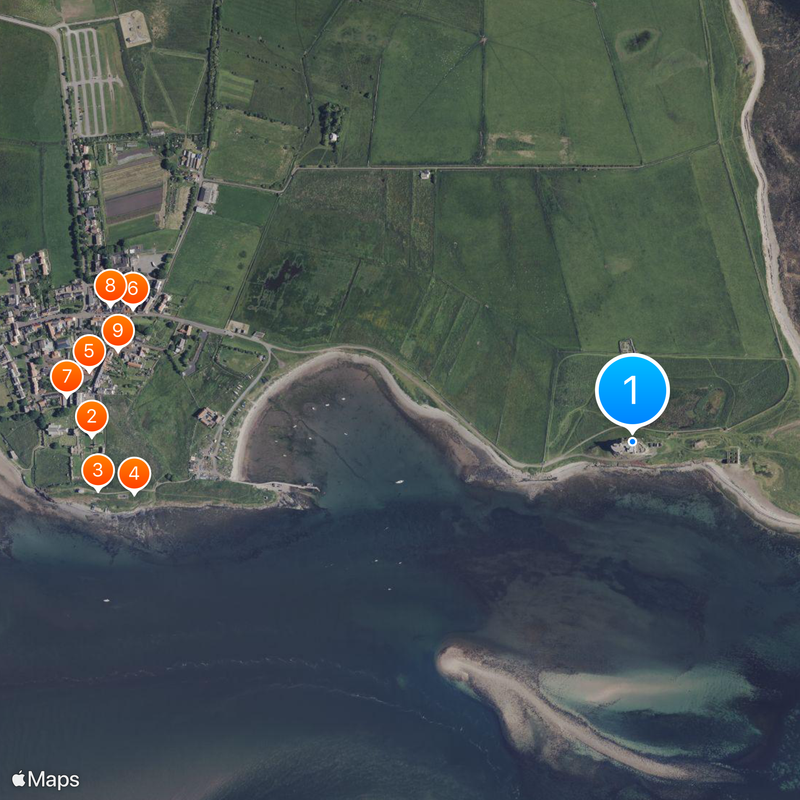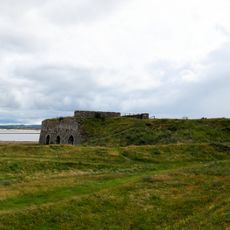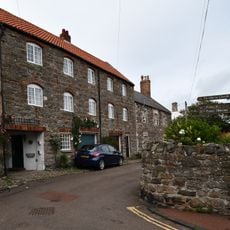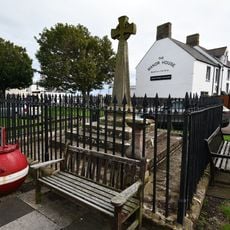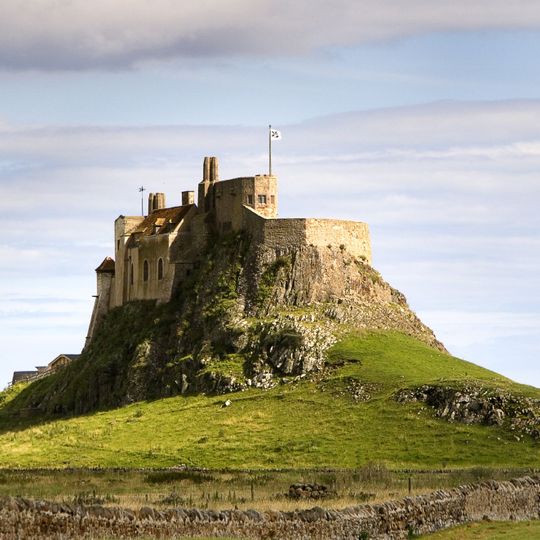
Lindisfarne Castle, House museum atop Beblowe Rock, Holy Island, England.
Lindisfarne Castle is a fortress built on a rocky outcrop on Holy Island off the Northumberland coast. The structure features solid stone walls and was remodeled inside in 1901 to function as a residence.
The fortress was built in 1550 under Tudor rule and used stones from the dissolved Lindisfarne Monastery. The building served for centuries as a defense against threats from the sea and land.
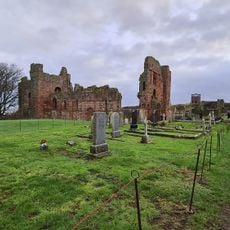
The name refers to the medieval monastery that once stood nearby, and the site carries memories of the island's monastic past. Visitors can sense this connection through the surrounding landscape and the fortification's role in local identity.
Access to the island and castle depends on the tides, as the causeway floods twice daily. Visitors should check tide tables before traveling and allow extra time for the journey.
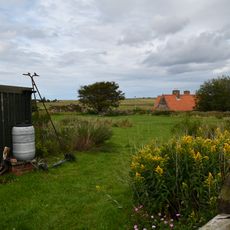
The gardens were designed by Gertrude Jekyll between 1906 and 1912 and still follow the original planting scheme today. This was carefully restored between 2002 and 2006 and noticeably shapes the island's appearance.
The community of curious travelers
AroundUs brings together thousands of curated places, local tips, and hidden gems, enriched daily by 91,534 contributors worldwide.