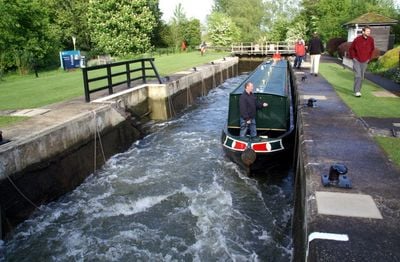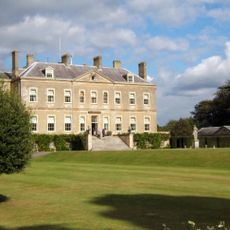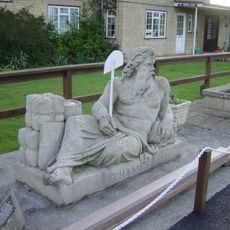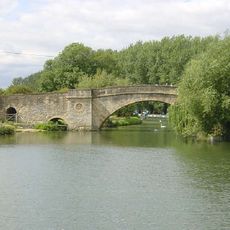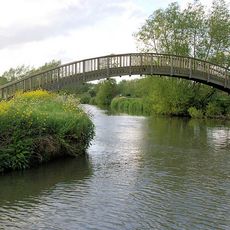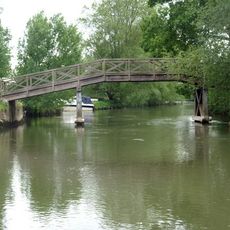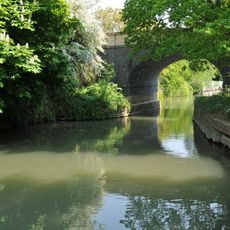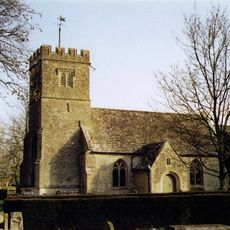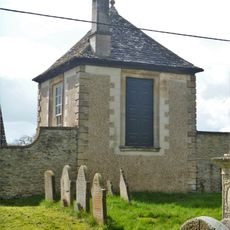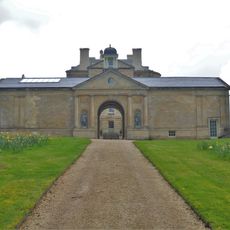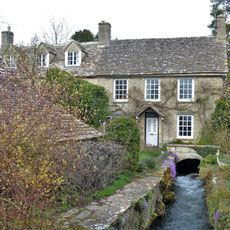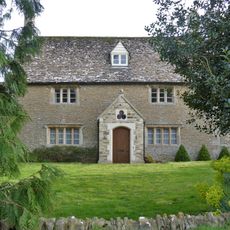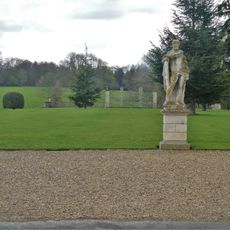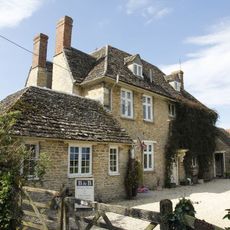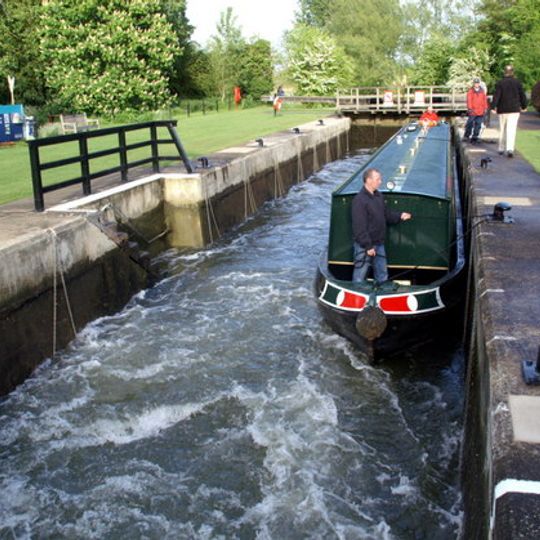
Buscot Lock, Lock and footbridge on River Thames in Oxfordshire, England.
Buscot Lock is a lock and footbridge on the River Thames in Oxfordshire. The installation includes a small stone lock with hand-operated gates and a keeper's house beside a tall poplar tree.
The lock was built in 1790 by the Thames Navigation Commission to replace an older weir system. This new structure allowed boats to navigate safely through water that had previously been rapid and difficult.
The place takes its name from the nearby village of Buscot and is now cared for by the National Trust. Visitors can watch otters, red kites, and kingfishers living around the weir pool.
The lock lies on several walking trails, including the route from Lechlade to Newbridge. Visitors will find facilities in the nearby village of Buscot, where a tea room is also located.
Robert Campbell acquired the lock in 1859 and installed water wheels to irrigate his estate. He also used the water power to produce alcoholic drinks from sugar beets for the French market.
The community of curious travelers
AroundUs brings together thousands of curated places, local tips, and hidden gems, enriched daily by 91,482 contributors worldwide.