George Square, Square in Edinburgh, Scotland
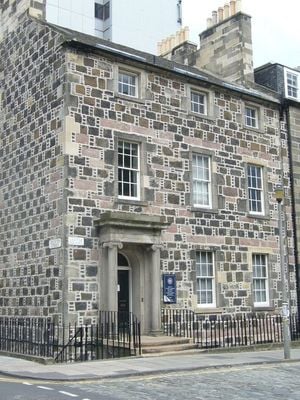
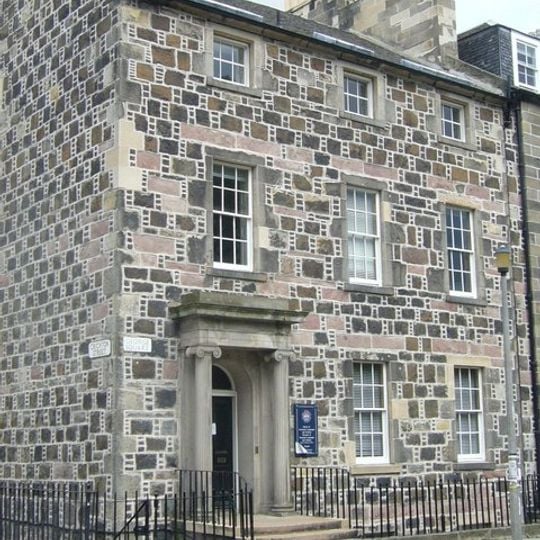
George Square is a city square in Edinburgh, Scotland, located south of the city centre next to the Meadows. It consists of Georgian terraced houses on the west and north sides, with university buildings such as the main library and lecture theatres on the south and east sides, and a central private garden.
The square was laid out in 1766 by the builder James Brown as a residential area outside the overcrowded Old Town. In the 1960s, the University of Edinburgh redeveloped much of the south and east sides, despite protests from conservation groups.
The central garden is privately owned but usually open to the public, and it contains a memorial statue called The Dreamer. The pavements around the garden are laid with vertical slivers of granite, a local technique known as horonising.
The square is easy to reach on foot from the city centre, and the central garden is usually open to the public through its southern entrance. Visitors should note that some university buildings may have restricted access, but the outdoor areas are generally accessible.
The square was the starting point of the Dundas Riots in June 1792, which were aimed at the house of the Lord Advocate Robert Dundas. Arthur Conan Doyle lived at No. 23 from 1876 to 1880 while studying medicine.
The community of curious travelers
AroundUs brings together thousands of curated places, local tips, and hidden gems, enriched daily by 94,700 contributors worldwide.