Nuneaton Priory, Medieval monastic complex in Nuneaton, England.
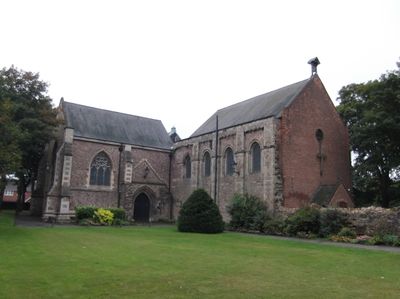
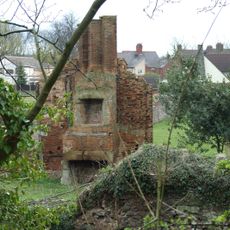
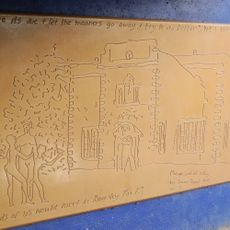
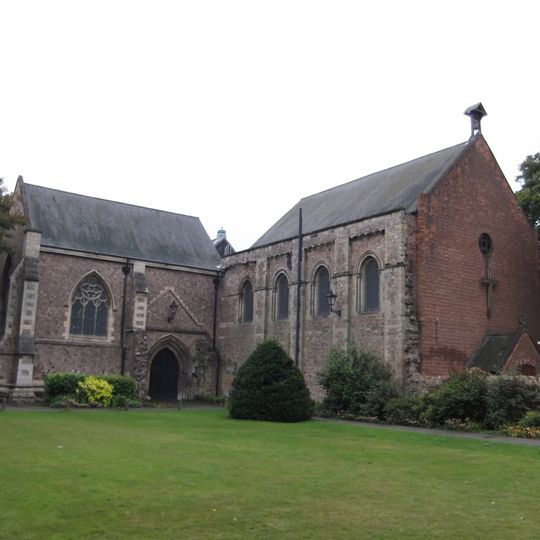
Nuneaton Priory is a medieval monastic complex consisting of church ruins, four substantial tower piers, and remaining walls arranged around a central courtyard positioned at the highest point of the site. Archaeological remains extend beneath current residential properties, with the main abbey structures occupying the eastern section while the outer precinct extends to the west.
Founded in 1153 by Robert de Beaumont and Gervase Paganell, the priory sustained a substantial religious community for nearly 400 years until its closure in 1539 during the Dissolution of the Monasteries. This abrupt end marked the collapse of monastic life across England as royal authority dismantled centuries of established religious institutions.
The priory housed both nuns and monks living in separate spaces, following the Fontevrault Order's unusual arrangement that existed in only a handful of English religious communities. This dual-gender structure is visible in how the buildings were organized around the site.
The site is interspersed with modern residential buildings, which limits direct access to all areas of the ruins. Walking around the perimeter and visible sections allows visitors to appreciate the remains while respecting property boundaries and protected archaeological areas.
Medieval records from 1234 indicate the priory housed more than 90 nuns, making it one of the largest religious communities in the region at that time. This substantial population reflects the institution's wealth and influence during its peak years.
The community of curious travelers
AroundUs brings together thousands of curated places, local tips, and hidden gems, enriched daily by 92,336 contributors worldwide.