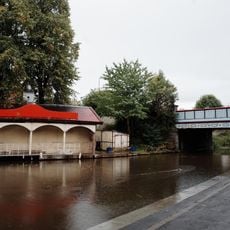
Slateford Aqueduct, Navigable aqueduct in Slateford district, Edinburgh, Scotland
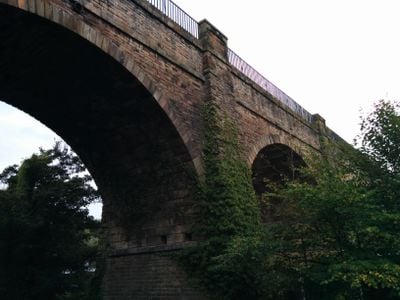
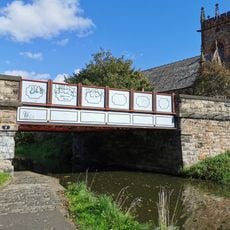
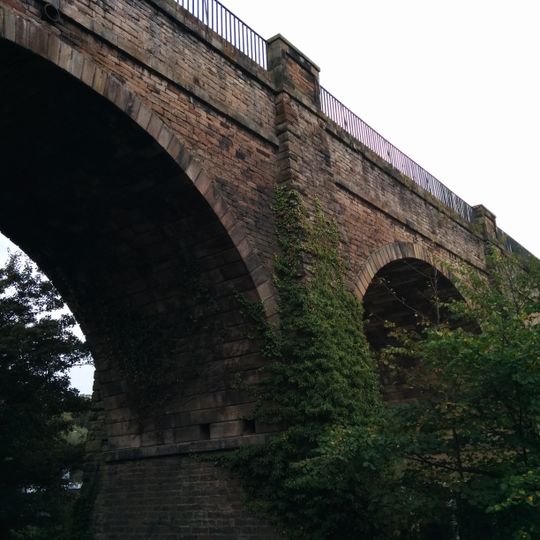
Slateford Aqueduct is a navigable aqueduct in Edinburgh, Scotland, carrying the Union Canal across the Water of Leith on a cast-iron trough supported by eight stone arches. The trough sits well above the river below, allowing boats to cross the valley at the same level as the rest of the canal.
The aqueduct was completed in 1822 under engineer Hugh Baird as part of the Union Canal, which was built to link Edinburgh to the Scottish canal network. When railways arrived in the 1840s, freight traffic on the canal dropped, but the structure itself was never demolished.
The aqueduct shows how early 19th-century engineers moved boats across a river valley by carrying the canal on top of stone arches. Today, walkers use the towpath and cross the same waterway that once carried freight barges.
The aqueduct is accessible from the Union Canal towpath, which connects on both sides to the city's walking network. The path surface can be slippery in wet weather, so sturdy footwear is a good idea when crossing.
The cast-iron trough was built to hold water without leaking, because even a small crack would have stopped the whole canal from working. This made the aqueduct one of the earliest large structures in Scotland to use cast iron as a load-bearing, watertight element.
The community of curious travelers
AroundUs brings together thousands of curated places, local tips, and hidden gems, enriched daily by 91,489 contributors worldwide.