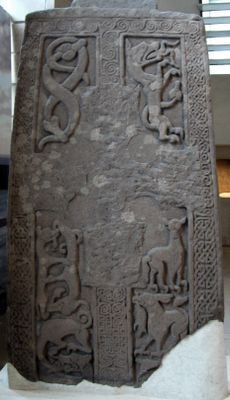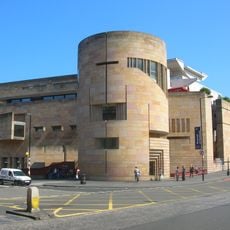
Woodwrae Stone, Pictish stone in National Museum of Scotland, Edinburgh, United Kingdom
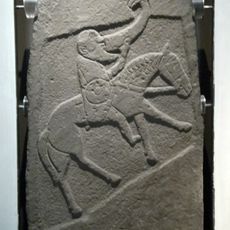
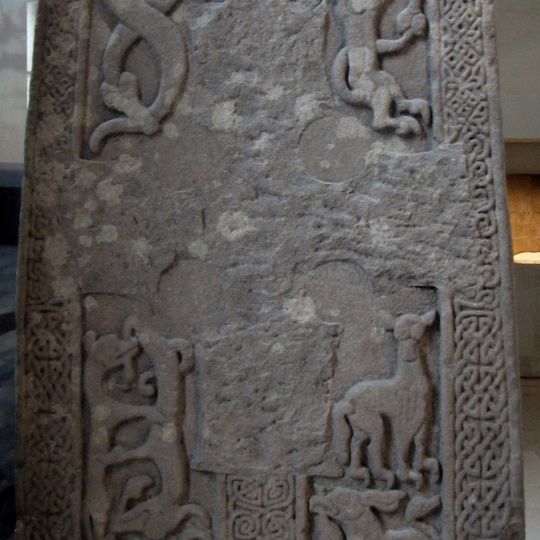
Woodwrae Stone is a carved Pictish monument made from red sandstone displaying imagery on both sides. One face shows a horseman and geometric disc patterns, while the other features interlaced borders and creatures with human figures gripped in their mouths.
The stone was found in 1819 when old castle foundations at Woodwrae were being cleared and it had been reused as a kitchen floor slab. This discovery revealed how Pictish monuments were repurposed in later centuries without awareness of their original meaning.
The horseman figure reflects the importance of riding and warfare in early medieval Scottish life. The geometric patterns and interlaced designs visible on the stone show how artistic styles were shared across Celtic and Pictish communities.
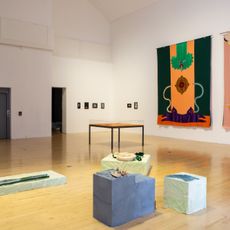
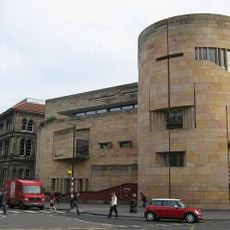
This stone is displayed in the National Museum of Scotland where you can view it at close range in a controlled setting. Information panels accompany the exhibit and explain the carving techniques and symbol meanings.
The creatures on the stone hold human figures gripped in their mouths, which may depict ritual scenes or mythical stories from Pictish belief systems. This type of carving detail is rarer on other Pictish monuments and gives this stone its distinctive character.
The community of curious travelers
AroundUs brings together thousands of curated places, local tips, and hidden gems, enriched daily by 90,838 contributors worldwide.