Exeter Cathedral astronomical clock, Medieval astronomical clock in Exeter Cathedral, England
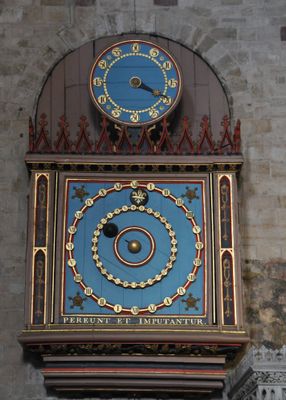
The Exeter Cathedral astronomical clock displays a golden sphere at its center representing Earth, with moving parts that show the moon's phases and tell time using Roman numerals. The mechanism has multiple rotating elements that work together in a complex arrangement visible from below.
The clock was built in 1484 and stands among the oldest of its kind in England. An upper dial with a single hand for showing minutes was added in 1759, giving it more precise timekeeping.
The Latin inscription below the clock shows how medieval people thought about time and faith as connected parts of life. The clock shaped how people in the cathedral marked their days and gathered for services.
The clock can be seen and heard from many spots in the cathedral, though the best view is from below when standing in the main nave. Timing your visit to hear the chimes and watch the mechanism move makes for a more rewarding experience.
A small circular opening beneath the clock was made to allow cathedral cats to hunt the mice attracted by animal fat used in the clockwork. This practical solution reveals how the maintenance and daily operation of the mechanism was managed.
The community of curious travelers
AroundUs brings together thousands of curated places, local tips, and hidden gems, enriched daily by 91,674 contributors worldwide.